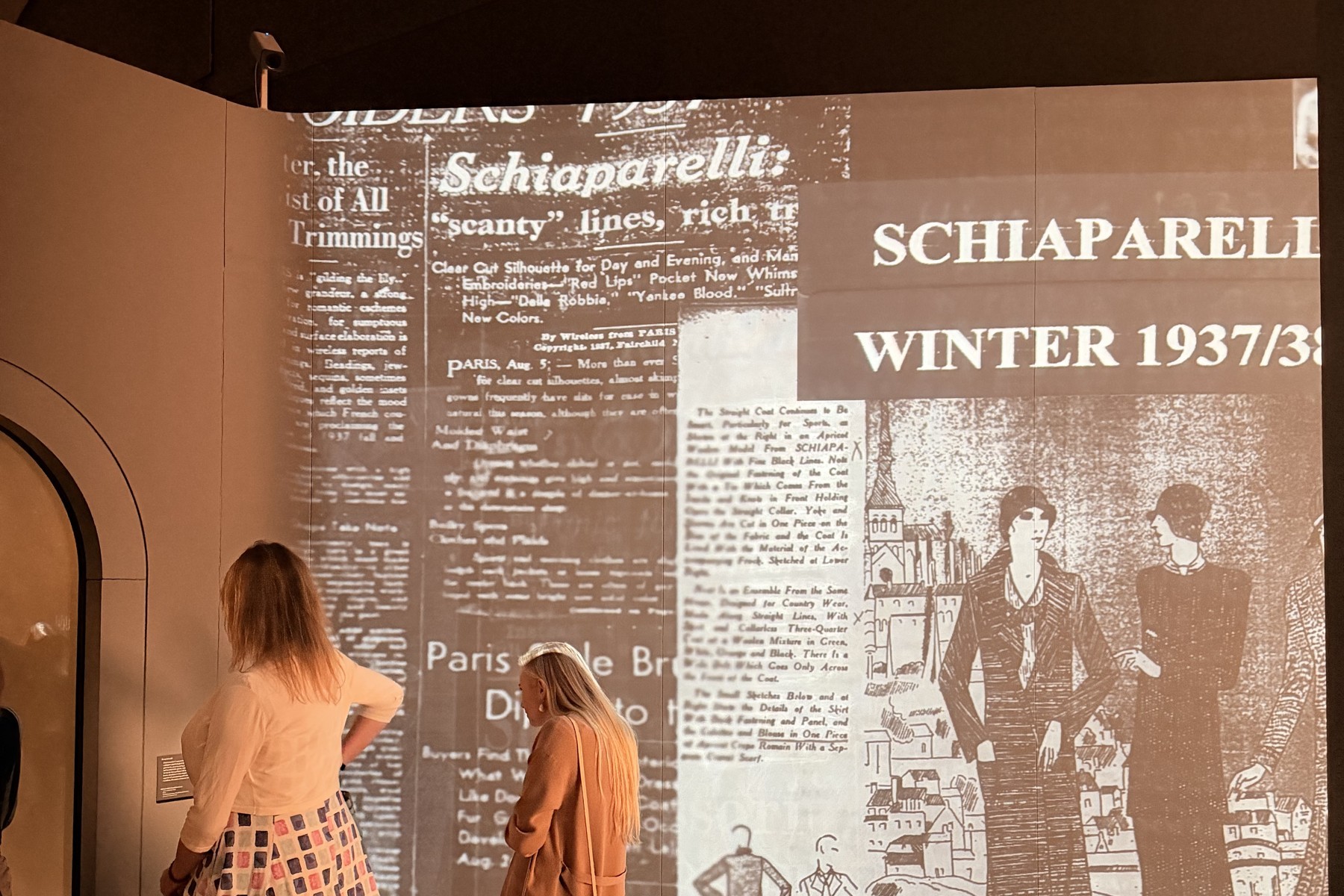
At the V&A's Schiaparelli, I came out thinking less about the clothes than about the people who had come to see them — and what they still recognised.
I went to the Schiaparelli exhibition at the V&A yesterday, and I came out thinking less about the clothes than about the people who had come to see them.
The entrance already tells you something. It is calm, almost solemn. Black and red, some dark columns, a staircase that turns in on itself, and screens playing old black-and-white footage of Paris and of fashion from another century. You slow down whether you mean to or not. As you go up, over the top of the exit stairs you can see other visitors on their way out, and for a moment the two currents of people cross.
What stayed with me was who was there. Most of the room, I would say eight out of ten, were women past fifty, and many far older than that. Couples. People who had dressed simply, and yet you could tell. A single ring. A watch. The way a plain jacket was cut. There was money in the room, certainly, but very little need to announce it. They moved through the show as if it belonged to them.
They did not rush. They read every label, leaned in to photograph the small details, stood in twos and threes and talked, sometimes disagreed. At the perfumes something changed. Women began remembering out loud the scents they used to wear, and without meaning to they were talking about their own lives.
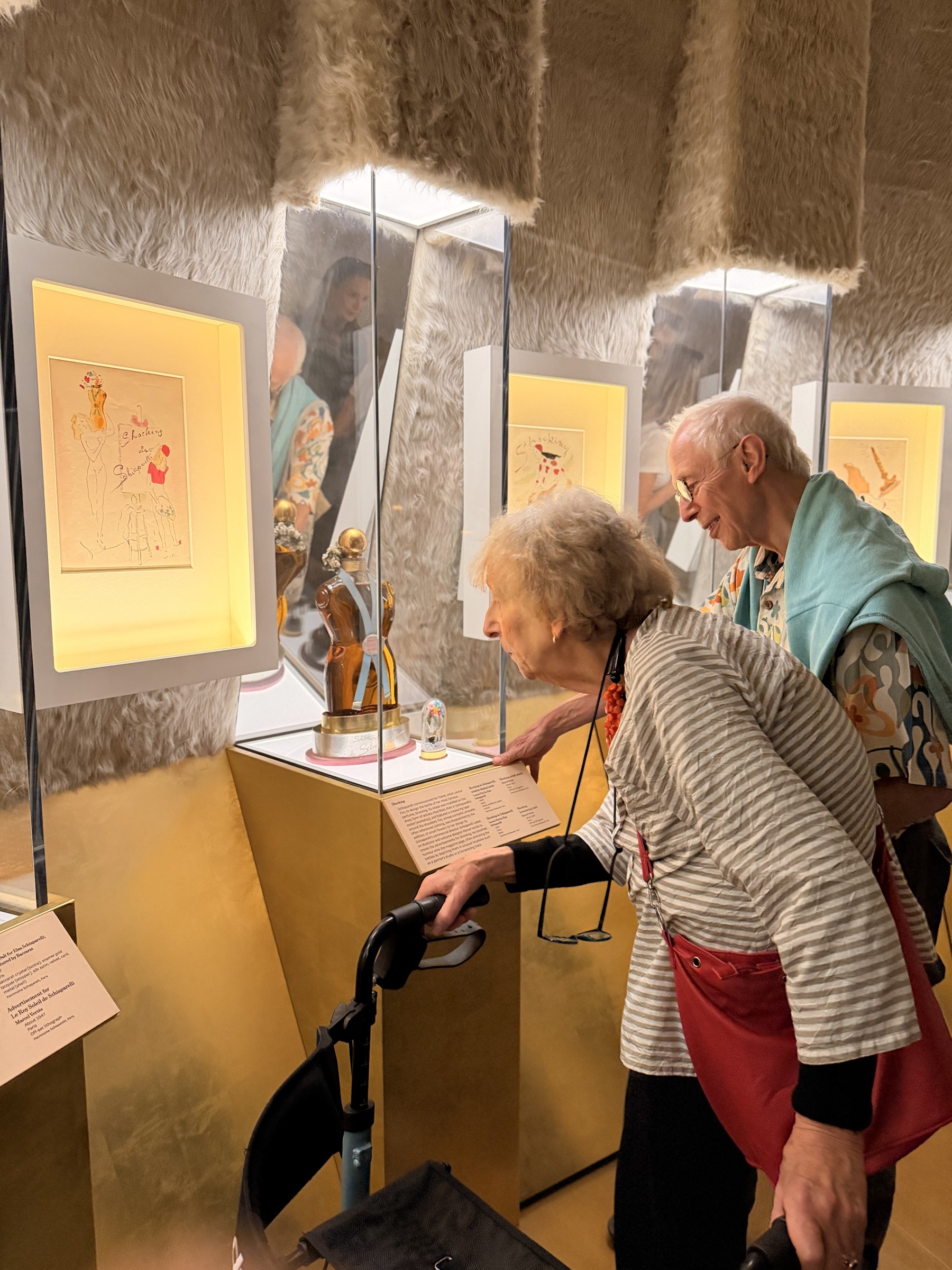
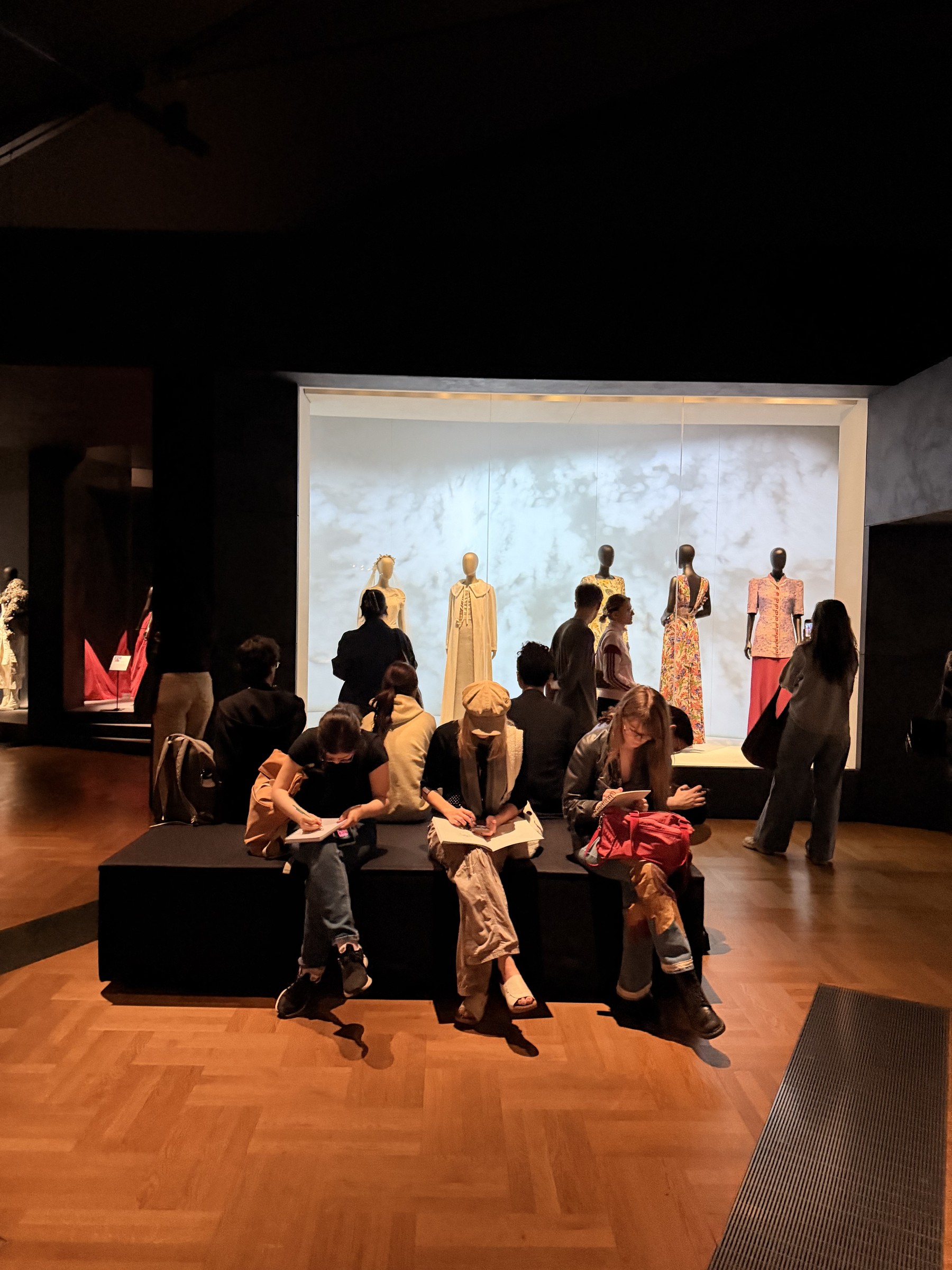
I spoke with a woman in her nineties who had come with her husband, also in his nineties. They could barely walk, but they stopped at everything, and at each piece they traded a memory, a dress they had once seen, the time it belonged to. In one corner, students sat on the floor sketching, copying a sleeve, a line.
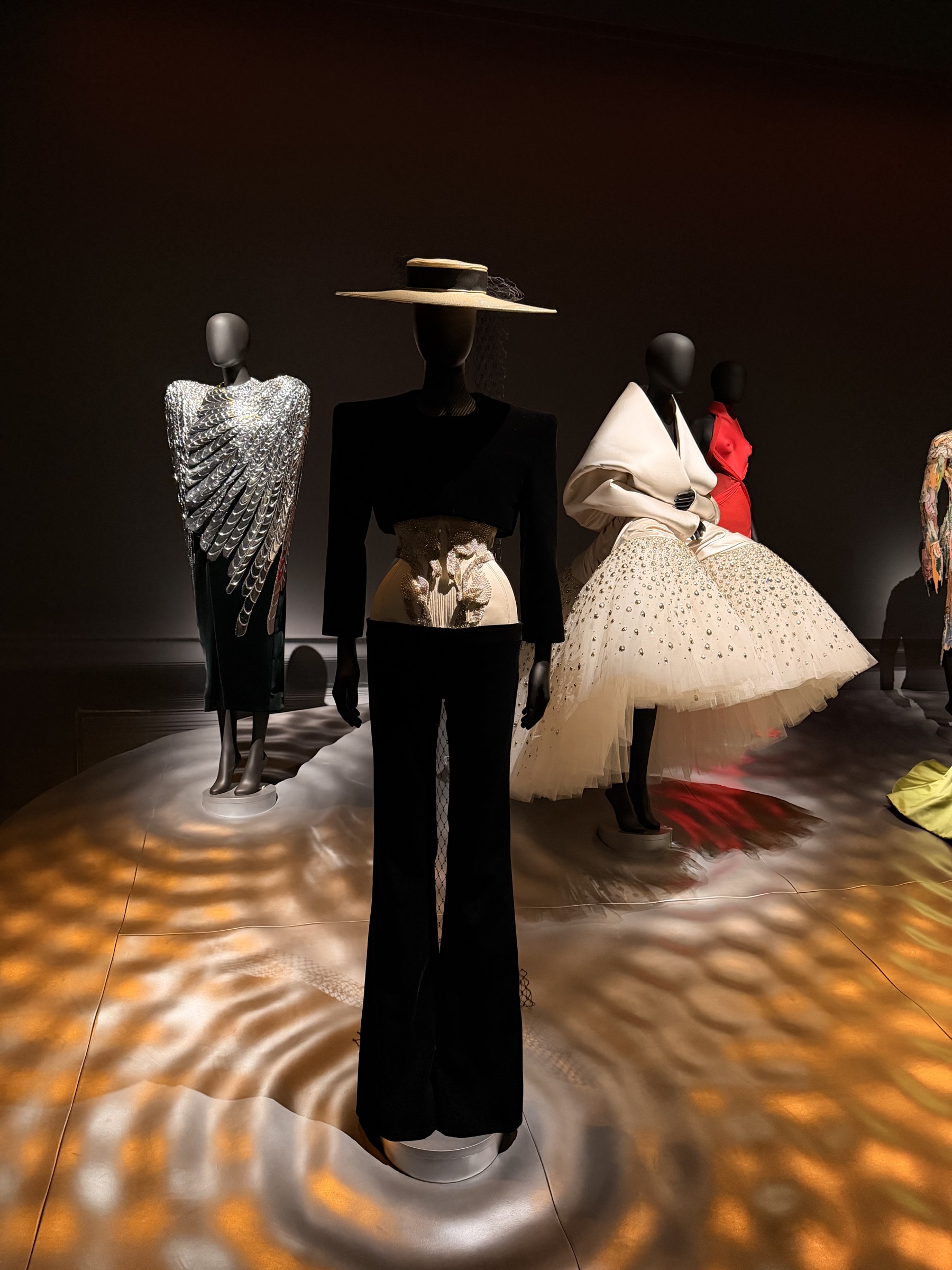
And there was one room where everyone stopped. A few of the strongest pieces stood together under this extraordinary light, the tulle, the caped collar, the black dress with the hat. I did not see one person get through it in under five minutes. It was not possible.
The whole time, one thought kept returning. When a designer is genuinely original, when the work and the detail are real, you can feel how it holds people, and how long it goes on holding them. That staying power is, in the end, what gives the work its value. Schiaparelli took seriously the kind of detail that an eye trained to notice craft and small codes can still read, decades on. That was the exhibition for me. Not the couture behind the glass, but the people in front of it, and what they still recognised.
Related: Everyone Came in the Coat — the Burberry trench at the V&A →
Schiaparelli: Fashion Becomes Art, V&A South Kensington, 5 April – 8 November 2026. Visited 2 October 2026. Admission from £28.
Written and photographed by Reza Gheibi.