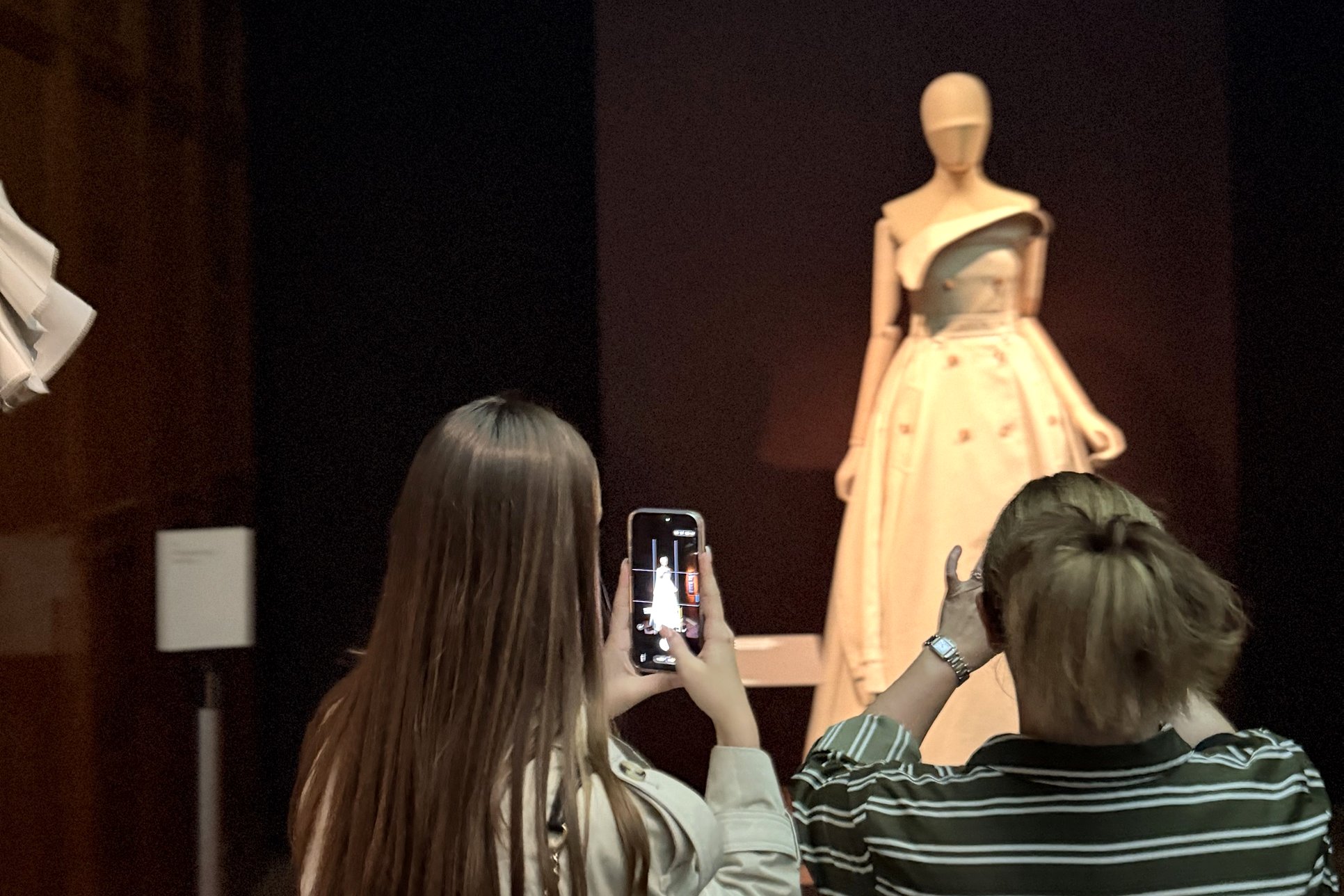
At the V&A, the Burberry trench entered the museum. On opening day, much of the room arrived wearing it.
The entrance is a long rectangle. Low music plays. The light falls only where it has been placed. The first thing a visitor meets is not a coat but a face: Thomas Burberry, white-bearded, hand at his chin, beside a plaster bust. The label supplies the founding number: he was 21 when he started the business in 1856.
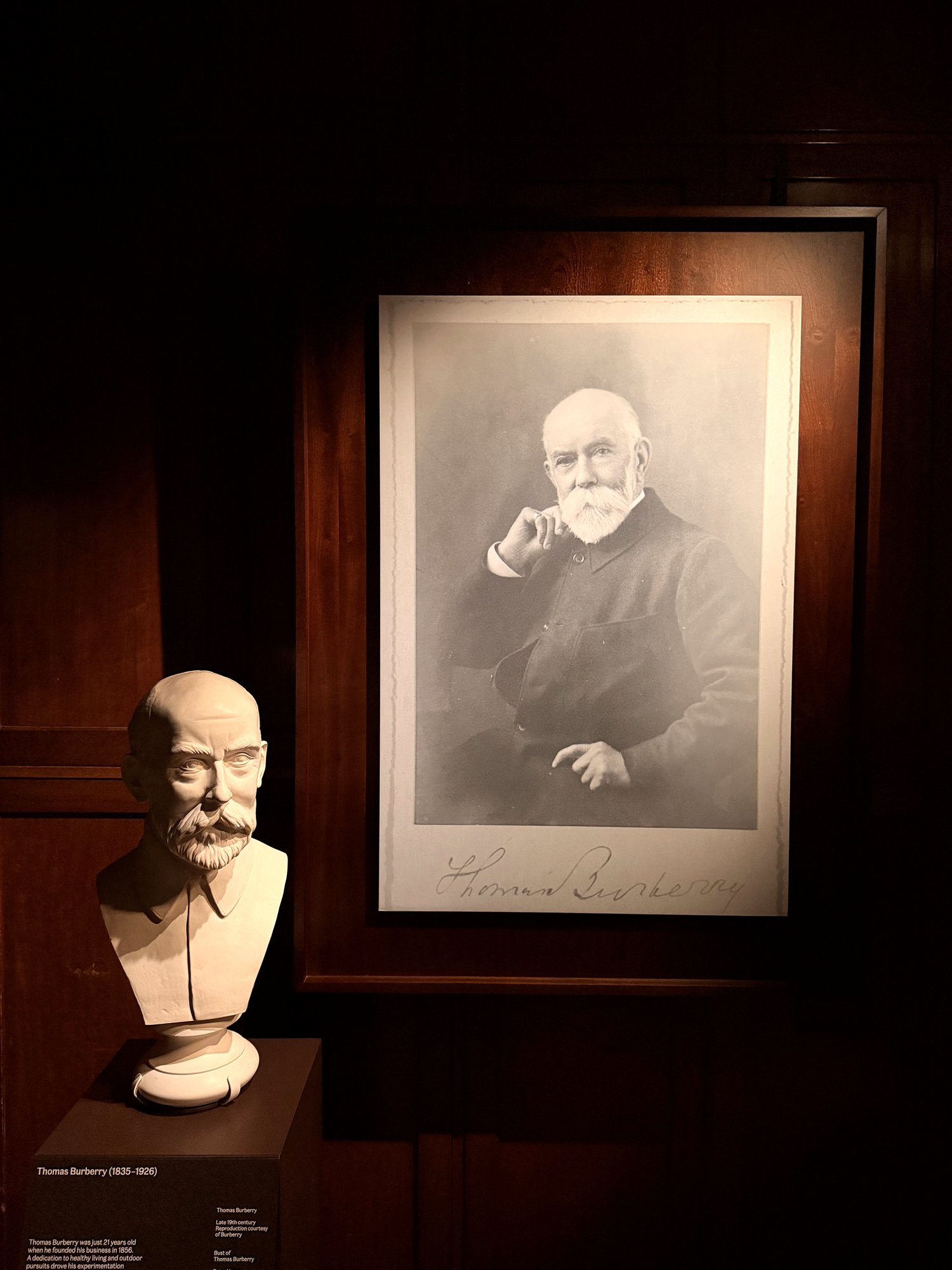
The Burberry Trench: Crafting an Icon opened on Monday 21 September. It occupies the Prince Consort Gallery, a room the museum seldom opens, lined with mahogany cabinets that once stored its textiles. The drawers have been pulled open to show catalogues, samples and invitations. The display runs in three sections, “Invention,” “Craft,” and “Creativity”. The sequence is simple, but not neutral. It moves from fabric, to coat, to what designers have done with it.
“Invention” is a story about weather and retail. Gabardine arrives in 1879. A printed calendar from Basingstoke in 1867 shows a draper who was also an agent for Singer sewing machines. A self-measure form from around 1930 let a customer anywhere in the world order a coat by post, and a repair and reproofing service kept it working for years afterwards.
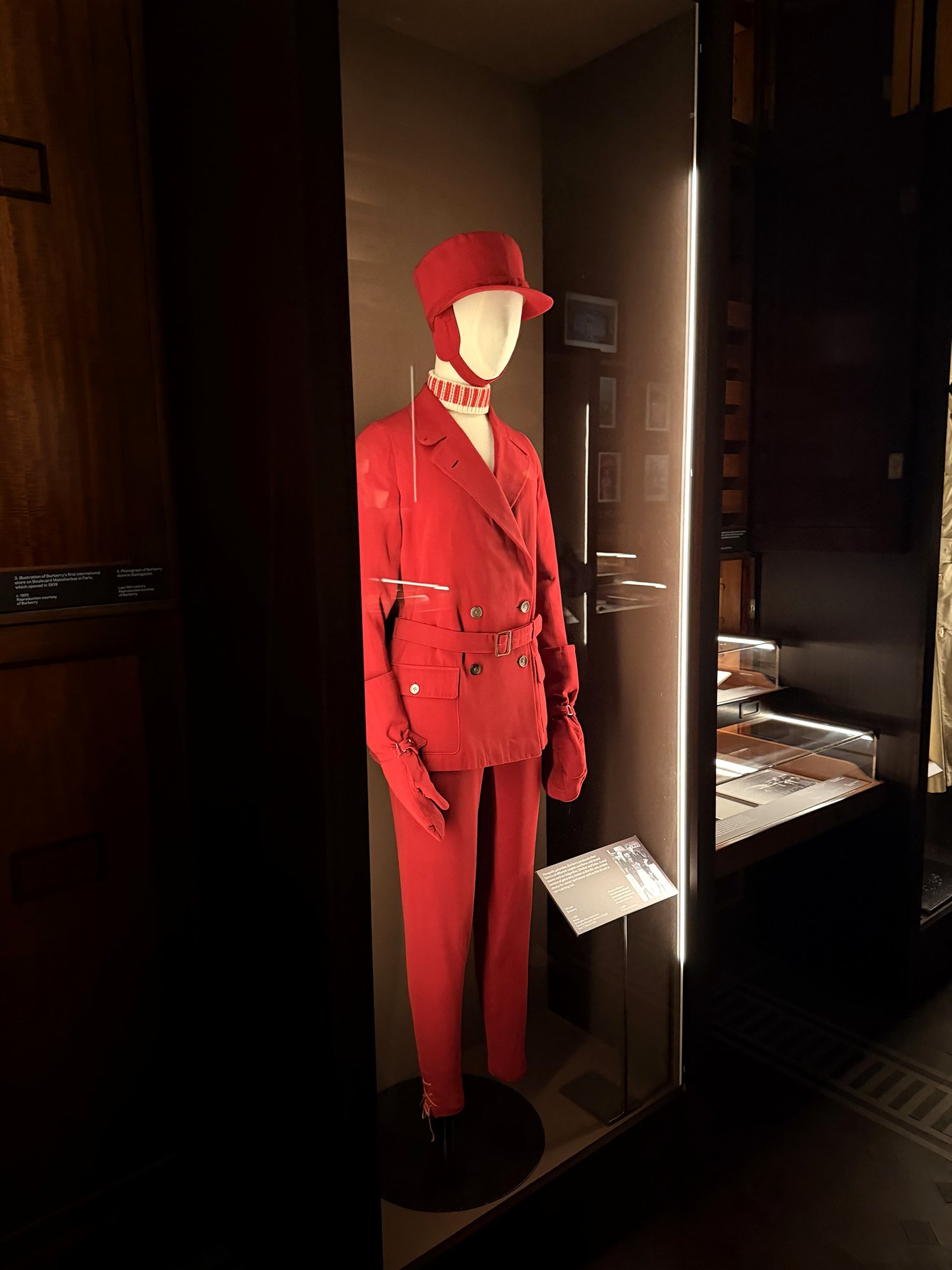
Two objects hold the room longer than the rest.
The first is a ski suit in red wool gabardine, made around 1929. Beside it is a photograph of Margaret Whigham, later Duchess of Argyll, wearing it in St Moritz. She gave it to the museum, and it has been in the V&A collection since 1978.
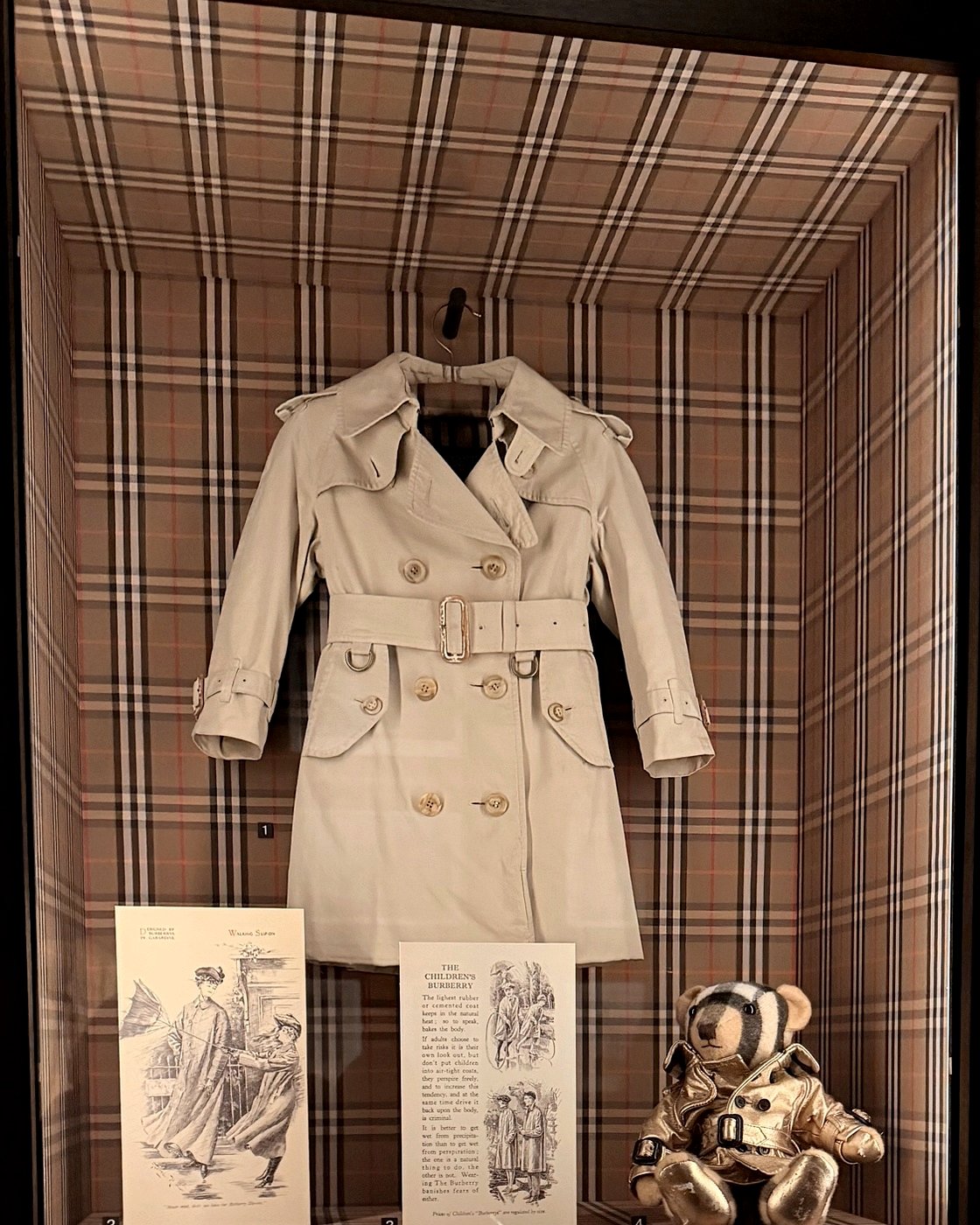
The second is small: a child’s trench in a case lined with check. Next to it hangs an old advertisement for “The Children’s Burberry.” It is sales copy, and a sharp one: it tells parents that sealing children into airtight rubber coats makes them sweat, and calls the practice criminal. The rival coat is the villain; the Burberry is the cure.
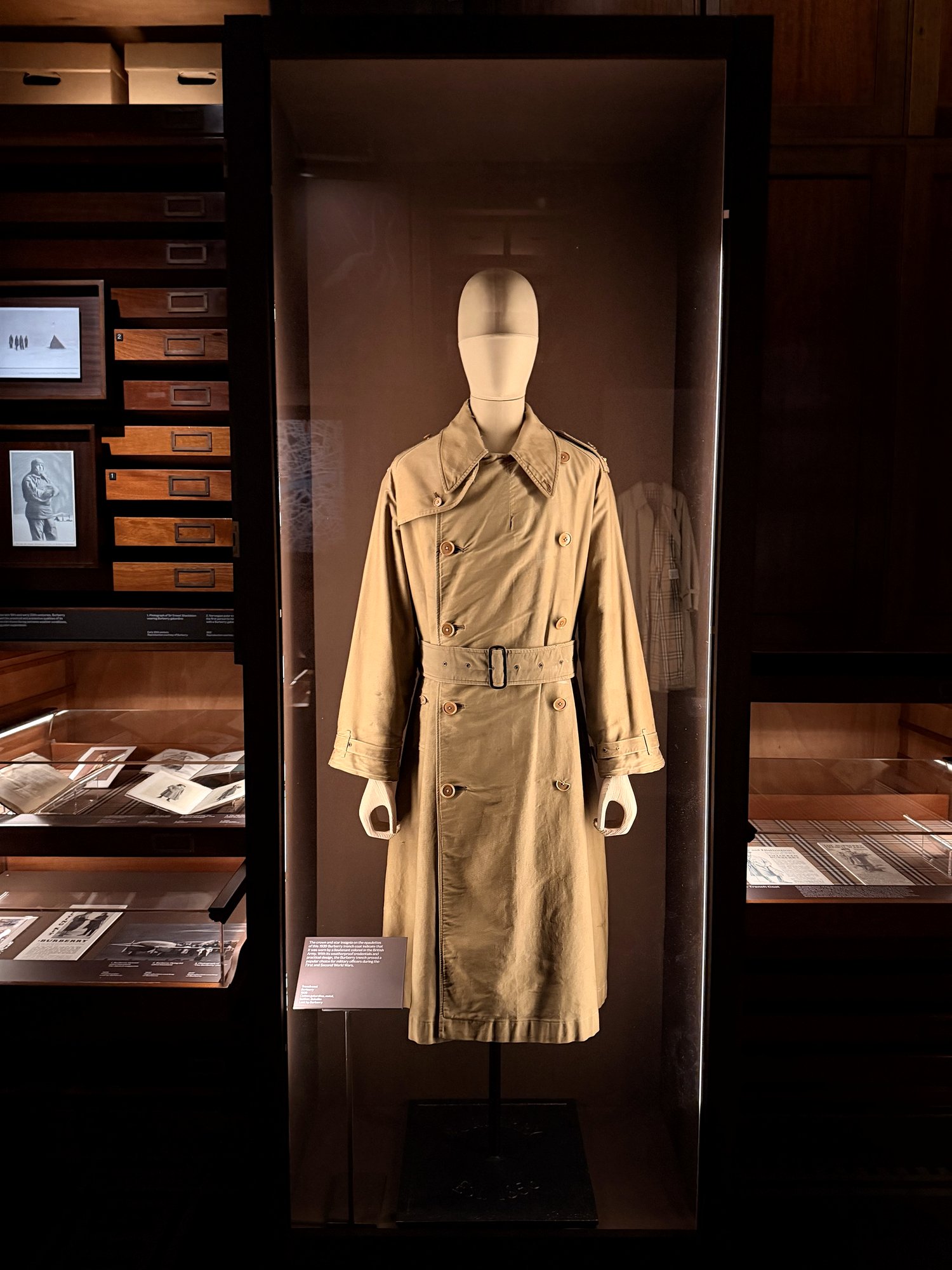
A 1939 trench carries a crown and star on its epaulettes, marking a lieutenant colonel. In “Craft,” projected text writes the names of the coat’s parts directly onto the fabric: belt, storm flap, House Check lining.
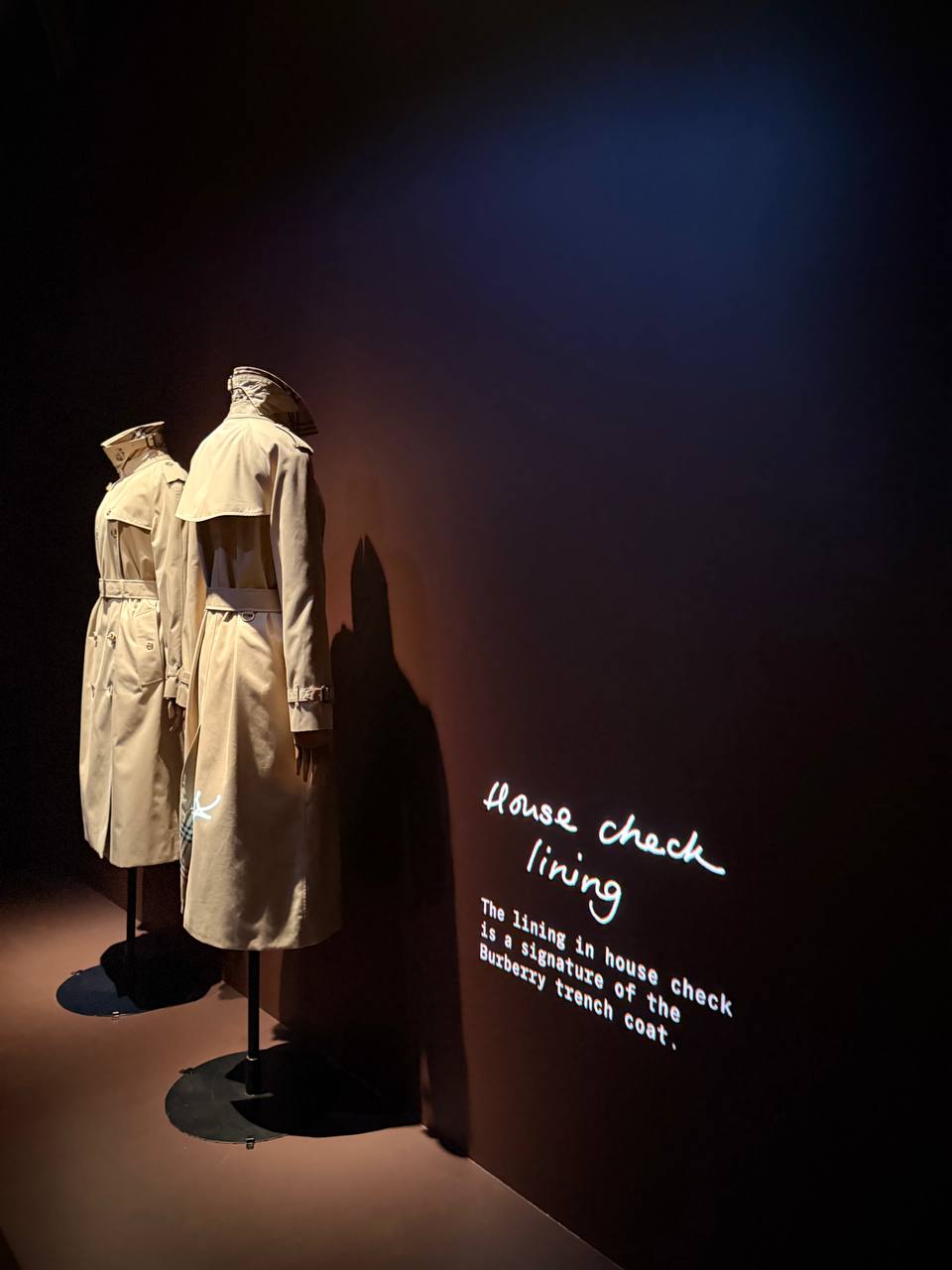
Then the gallery opens into its final corridor. Mannequins stand on plinths along both walls, with cloud images glowing overhead. This is “Creativity”: 19 runway looks from the past two and a half decades. Christopher Bailey’s mirror-work coat from Spring/Summer 2015 is here, as is Daniel Lee’s frayed, faded-print trench from Winter 2025. At the far end, alone in the dark, stands Riccardo Tisci’s strapless trench ballgown from Autumn/Winter 2022.
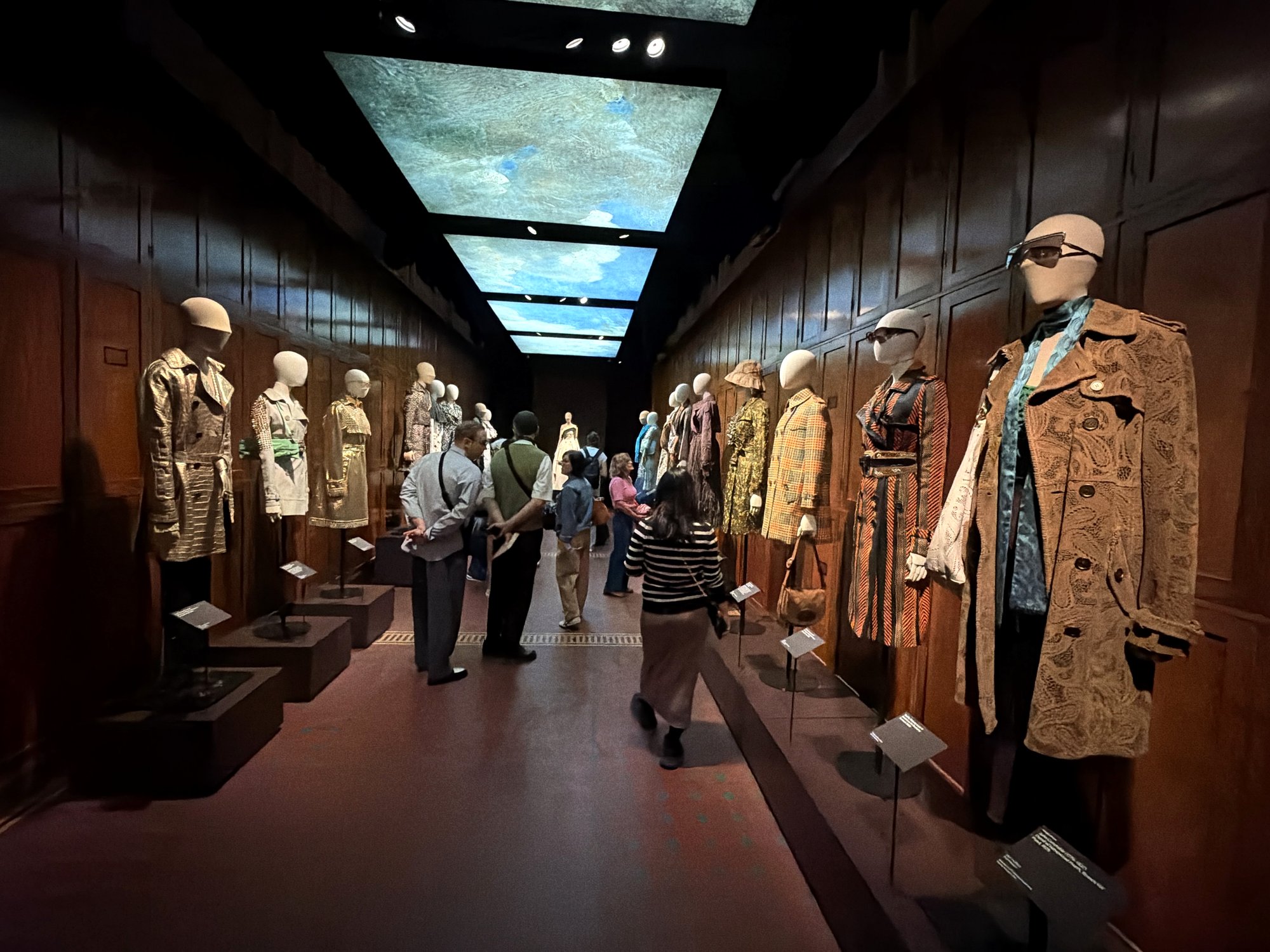
The ballgown was where the phones went up. On opening day there were twenty or thirty people in the room. They were varied in age, but most had plainly come for the brand, and many had dressed in its vocabulary: beige trench, belt, check at the collar. One young woman in a trench photographed the Tisci gown while wearing the coat it was built from.
So, on one day, the trench existed in three states. It was an object behind glass. It was a coat on the visitors who came to see it. And that evening, a few miles away, it returned to the runway. Daniel Lee showed Burberry’s Summer 2027 collection at Chelsea College of Arts, the art school where his collaborator, the textile designer Celia Birtwell, once taught. The first look out was a trench, crumpled on purpose, its hem ballooned. With Birtwell, even the house check loosened into something nearer gingham. It was Burberry’s fourth show at the college. The museum showed a coat that had arrived; the runway showed one still being creased.
The display is candid about who built it, for anyone who reads the labels. Almost every object is marked “Lent by Burberry” or “Reproduction courtesy of Burberry.” According to WWD, the V&A holds 39 Burberry-related works, dated 1908 to 2014; only a few objects here carry museum numbers. One is a bottle-green trench from 1988, donated by Burberry and displayed by the museum that same year. Among the archive pieces sits a House Check barrel bag dated 2026. There is no shop at the exit.
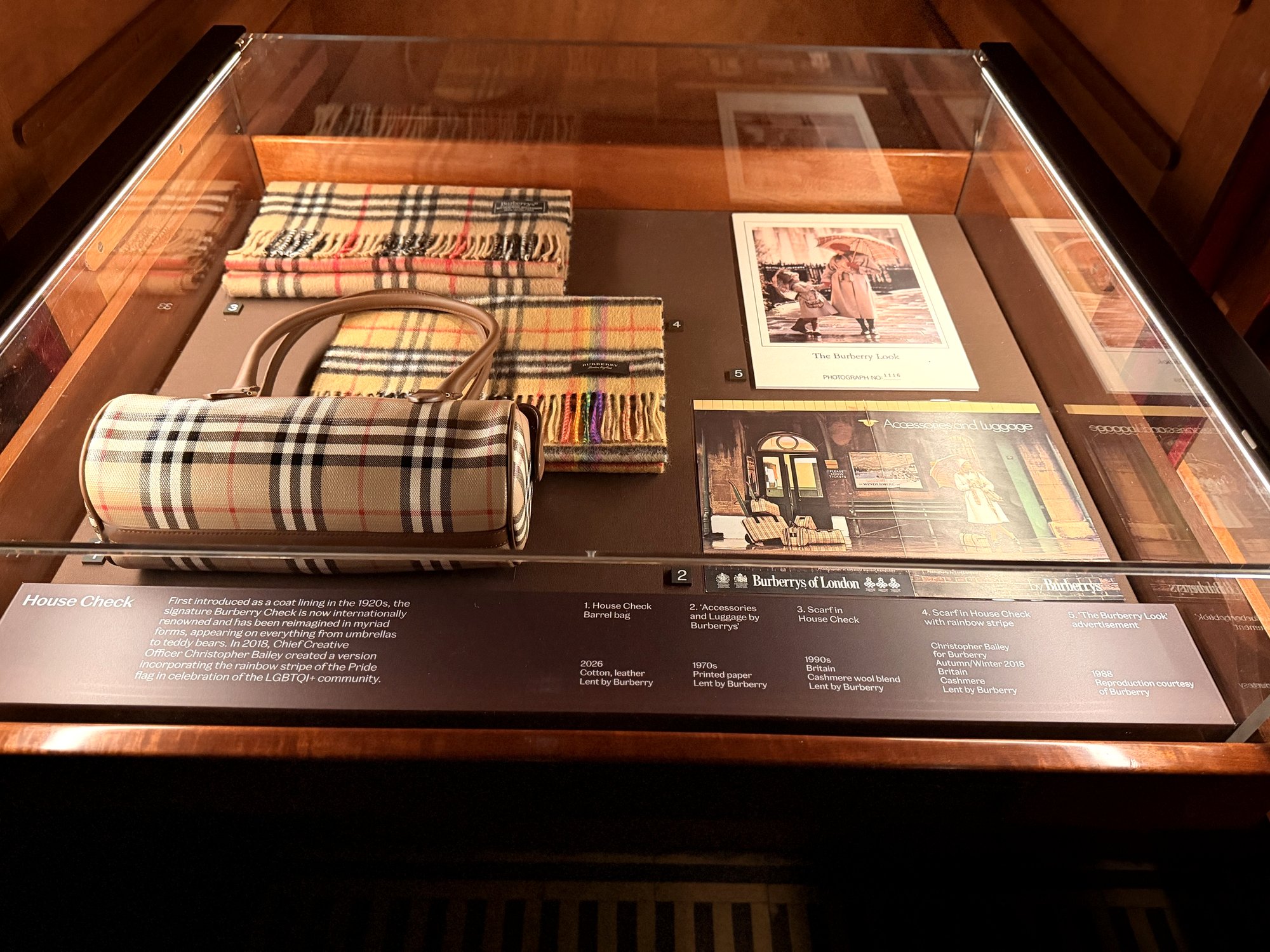
The display marks the house’s 170th anniversary. It also sits inside a longer arrangement: Burberry supports the V&A through a multiyear partnership, and the museum’s transformed fashion galleries will open as The Burberry Gallery in autumn 2028. None of this is hidden, and the room does not feel like advertising. Advertising asks for attention now. This display asks for duration. It places the trench inside the slower authority of the museum, where a commercial object can start to look less like a product and more like a fact.
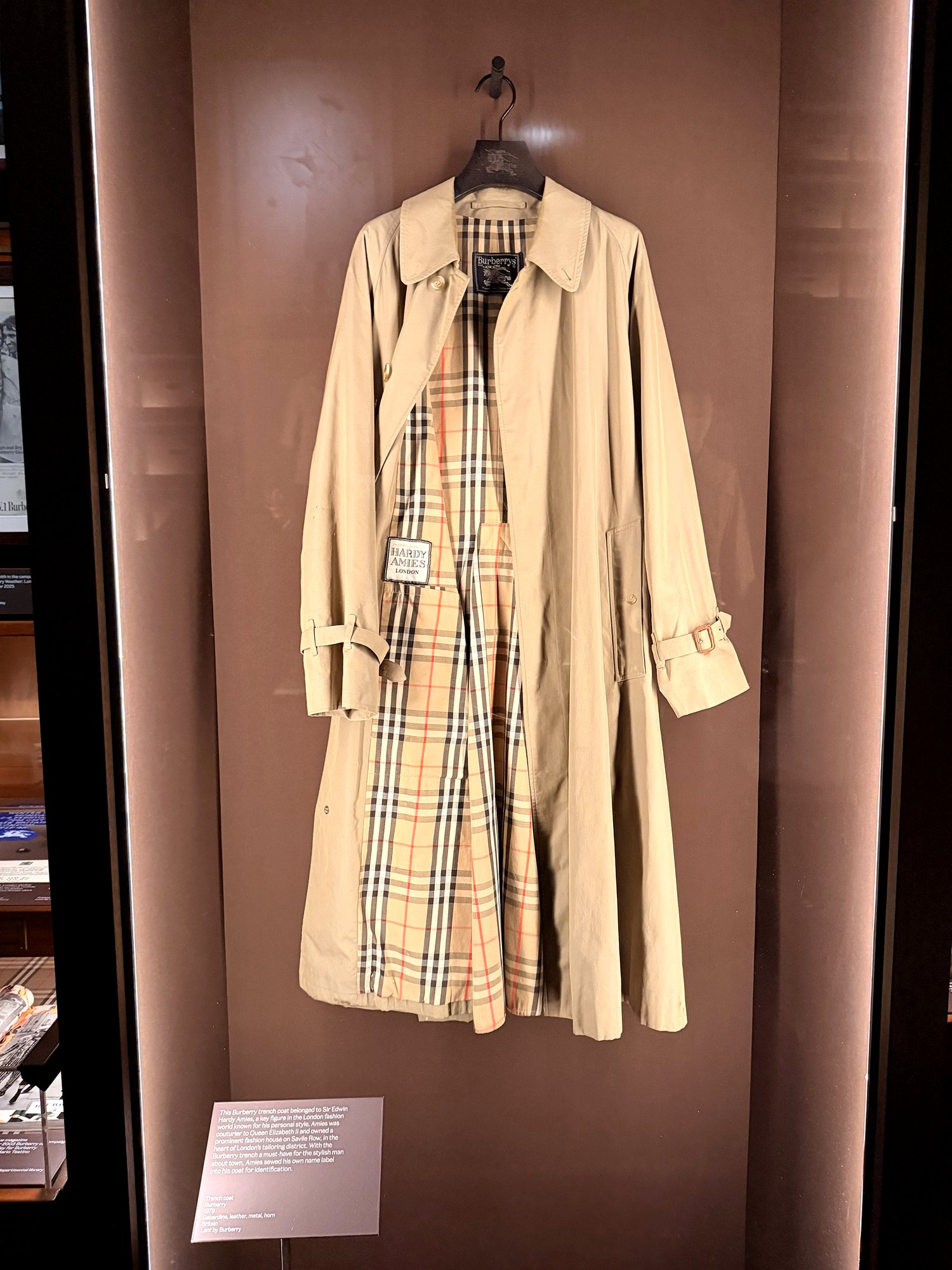
The most honest object in the room is a 1979 trench that belonged to Sir Hardy Amies, couturier to Queen Elizabeth II. Its label explains that the Burberry trench had become a must-have for the stylish man about town, so Amies sewed his own name label inside his coat to tell it apart. In a gallery where the visitors and the exhibits wear the same coat, it is the most practical idea on display.
Related: ELIN House Read №002 — Burberry →
The Burberry Trench: Crafting an Icon, Prince Consort Gallery, V&A South Kensington, until 3 January 2027. Free.
Visited 21 September 2026, the opening day. Admission free. Object details are from museum labels. Details of the Summer 2027 show are from Vogue, 10 Magazine, CNN and Dazed, not observation. Reporting and photographs by Reza Gheibi.