A £120 stalls ticket at La bohème bought proximity, facial detail and vocal force — but not the orchestra, not the whole stage, not neutrality. A Room Study on what a seat actually buys.
Fieldwork: Royal Opera House, London. Performance: La bohème, 16 July 2026, 1.30pm.
Threshold
Every seat in an opera house is an argument about what matters.
For the 1.30pm performance of La bohème on 16 July, tickets were publicly advertised from £56. I paid £120 for a seat in Row 8 of the stalls, slightly off-centre.
Before sitting down, the price appeared to promise a familiar bundle: proximity to the performers, a fuller view, stronger sound, greater comfort and a better position within the room.
It delivered some of these things. Not all.
The first allocation had already taken place before the curtain rose. Price had determined where I entered the work — and therefore which parts of it would become legible.
Allocation
From eight rows back, the singers were not distant figures inside a composition. Their faces registered. Movements carried intention. Small gestures survived the distance between stage and seat.
The voices arrived with unusual immediacy. They felt stronger and more direct from below, particularly in the intimate exchanges. The position concentrated attention on the performers and reduced the scale of the institution around them.
But the orchestra was not visible.
The stage could be read in detail, but not in full. The production’s larger geometry — the relationship between performers, scenery, chorus, pit and auditorium — remained incomplete.
This was not simply an obstructed view. It was a particular distribution of attention: intimacy was made available; total composition was not.
Claim
The architecture of a major opera house suggests a hierarchy. Higher prices appear to move the audience closer to a complete experience.
The room disclosed something less linear.
A seat does not provide more or less of one identical product. It produces a version of the work. From the stalls, La bohème became a study of faces, bodies and voices. The closeness was real. So was the exclusion.
The £120 ticket had purchased proximity. It had not purchased neutrality.
Friction
The friction was precise: the price and the field of vision did not fully correspond.
After the interval, with the permission of a member of the front-of-house staff, I moved to a balcony position facing the stage.
The work changed.
From above, the orchestra entered the picture. The stage became whole. Crowds, scenery and movement could be understood as a composition rather than encountered as a sequence of details. The scale of the production — and the labour supporting it — became visible.
The sound changed too. The singers had been stronger and more immediate from below. From the balcony, the visual order improved while the vocal encounter became less direct.
Neither position contained the complete performance.
One privileged intimacy. The other disclosed structure.
The difference was not between a good seat and a bad one. It was between two edits of the same room.
Residue
What remained after the performance was divided between them.
From below: the faces and movements of the performers in the early acts, and the direct force of their voices.
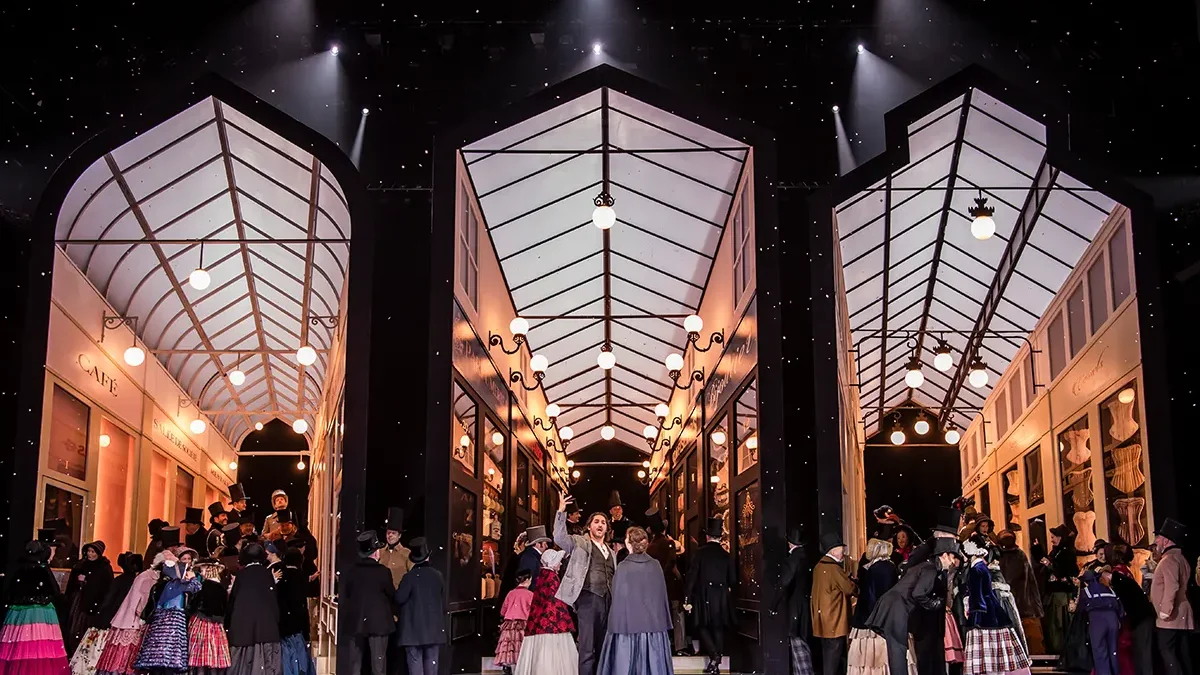
From above, after the interval: the winter scene, the falling snow, the full stage and the orchestra beneath it — and the weight of Mimì’s final moments, now seen whole.
A third element also remained: the intervention of the staff member who permitted the move. A small act of discretion altered what the institution allowed me to see. The second position was not included in the original purchase, yet it completed the memory of the afternoon.
The performance stayed constant. My position did not.
What £120 bought was not La bohème in full. It bought one way of remembering it.
Sold, bought, unavailable
Sold. A £120 stalls seat, eight rows from the stage and slightly off-centre.
Bought. Proximity, facial detail and the stronger, more direct presence of the singers’ voices.
Unavailable. A single purchased position combining intimacy, orchestra visibility and the complete composition of the stage.
Evidence note
C — Confirmed. The author’s ticket and receipt record the 16 July 2026, 1.30pm performance, a £120 purchase and a Row 8 stalls position.
W — Witnessed. The orchestra was not visible from the purchased seat. After the interval, a member of the front-of-house staff permitted a move to a balcony facing the stage.
A — Archived. Royal Ballet and Opera records confirm the performance. A third-party listing for the same 1.30pm performance advertised tickets from £56.
I — Interpretation. The ticket did not purchase a more complete version of the work. It purchased a distinct allocation of attention.
Sources: Royal Ballet and Opera production archive · performance listing.