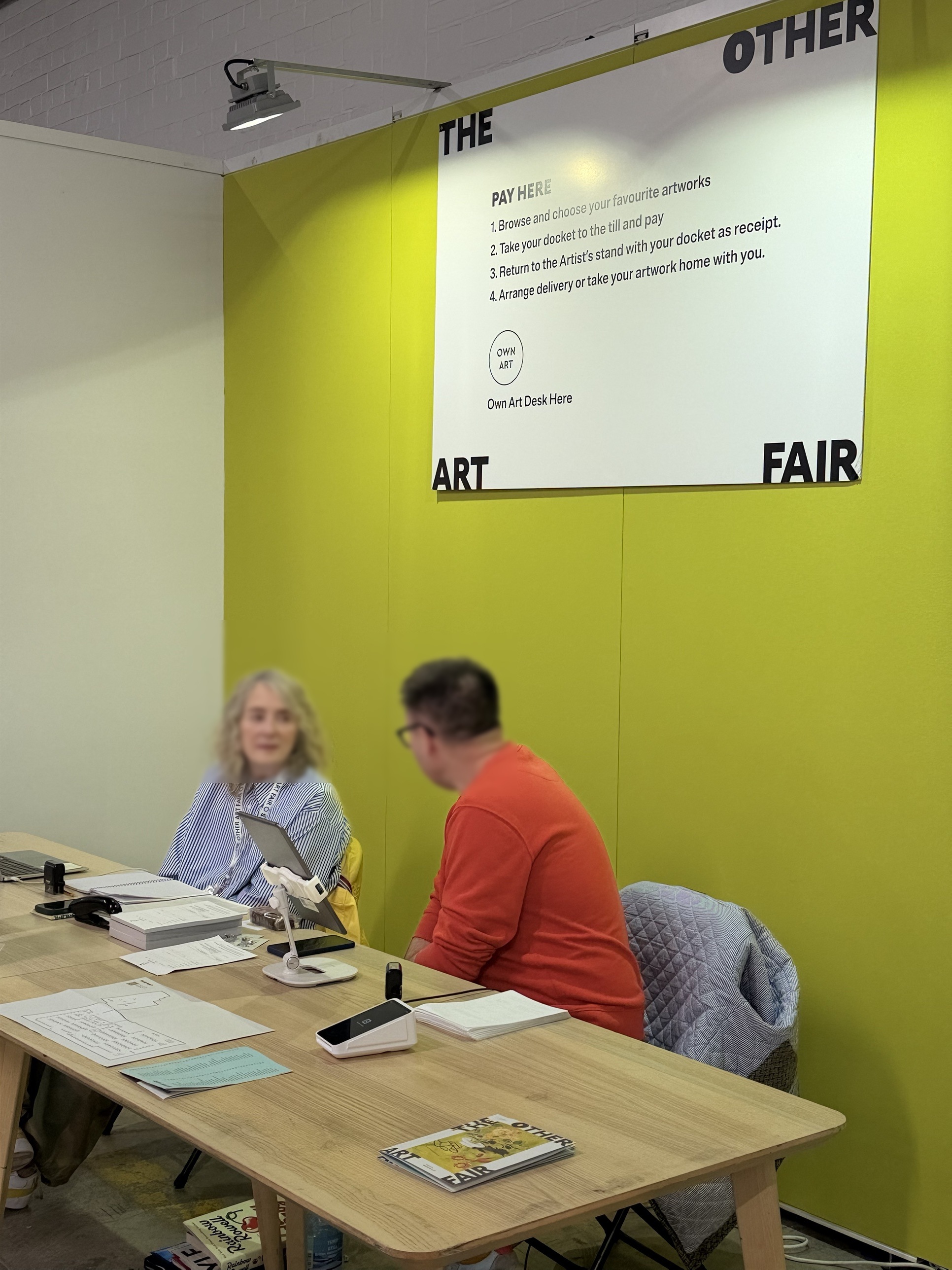
Hundreds of artists, one shared till, and a yellow sign that told you where to pay. ELIN reads The Other Art Fair as a room built so the frame is paid first — at the door, at the bar, at the till — and the maker last.
I went to The Other Art Fair to look at the art. I left thinking about a wall that wasn’t art — the yellow one, near the middle, that told you where to pay.
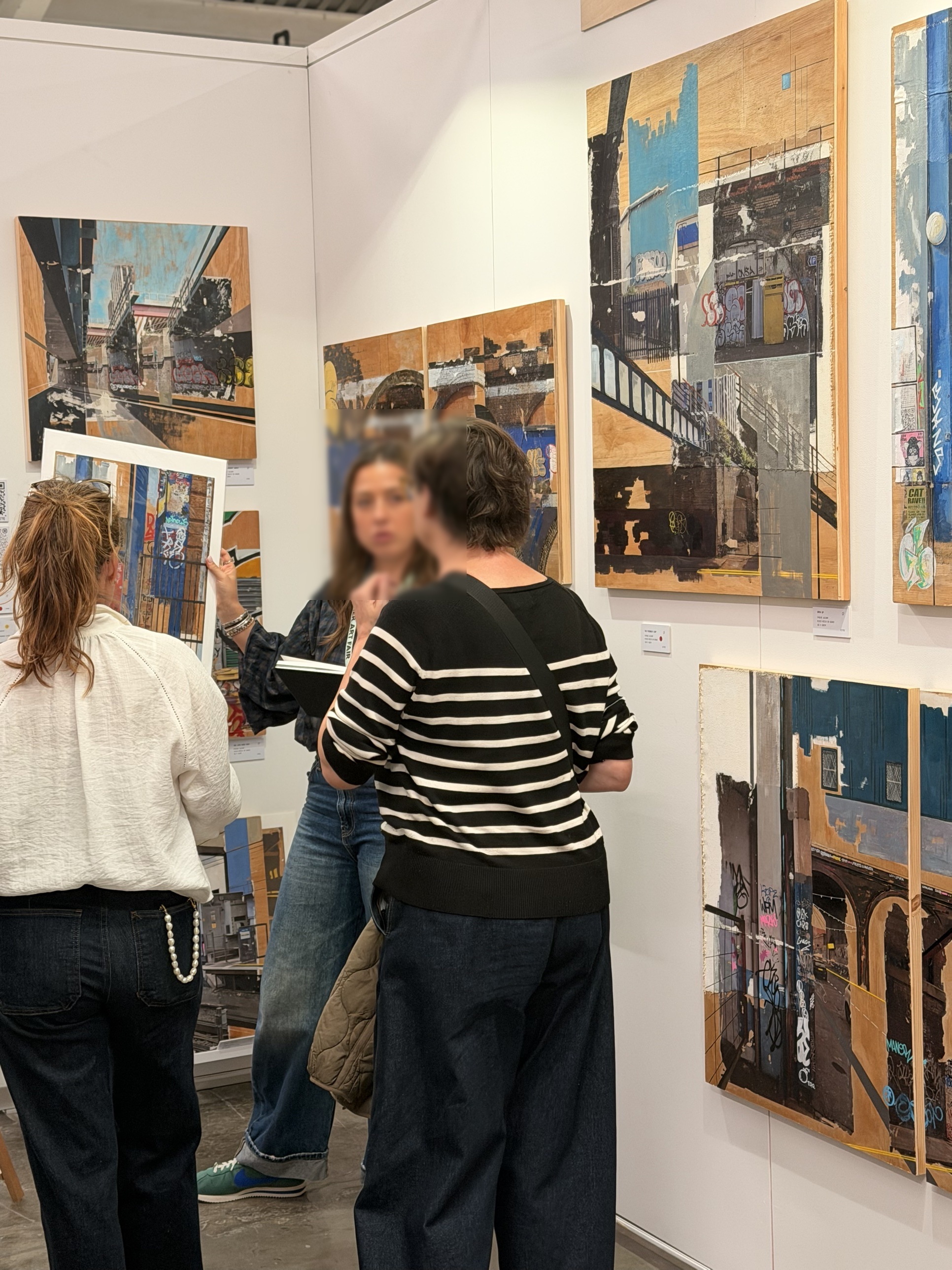
On a stand near the entrance a man stood slightly apart from his own work, hands in his pockets, while the crowd moved past him. He had hung a wall of city scenes built up on wood panels: railway arches, stairwells, graffiti sanded back and painted over until the board itself looked weathered by real rain. You could see the hours in them. People glanced and kept walking.
What they were walking toward, in the end, was a wall painted a hard municipal yellow. On it, four numbered steps. Browse and choose. Take your docket to the till and pay. Return to the stand with the docket as your receipt. Arrange delivery, or carry the work home. Below that, in smaller letters, a desk for Own Art, the interest-free loan. I kept coming back to that wall. A fair is usually built around the art. This one was built around a single till, and it said so in the plain language of a supermarket.
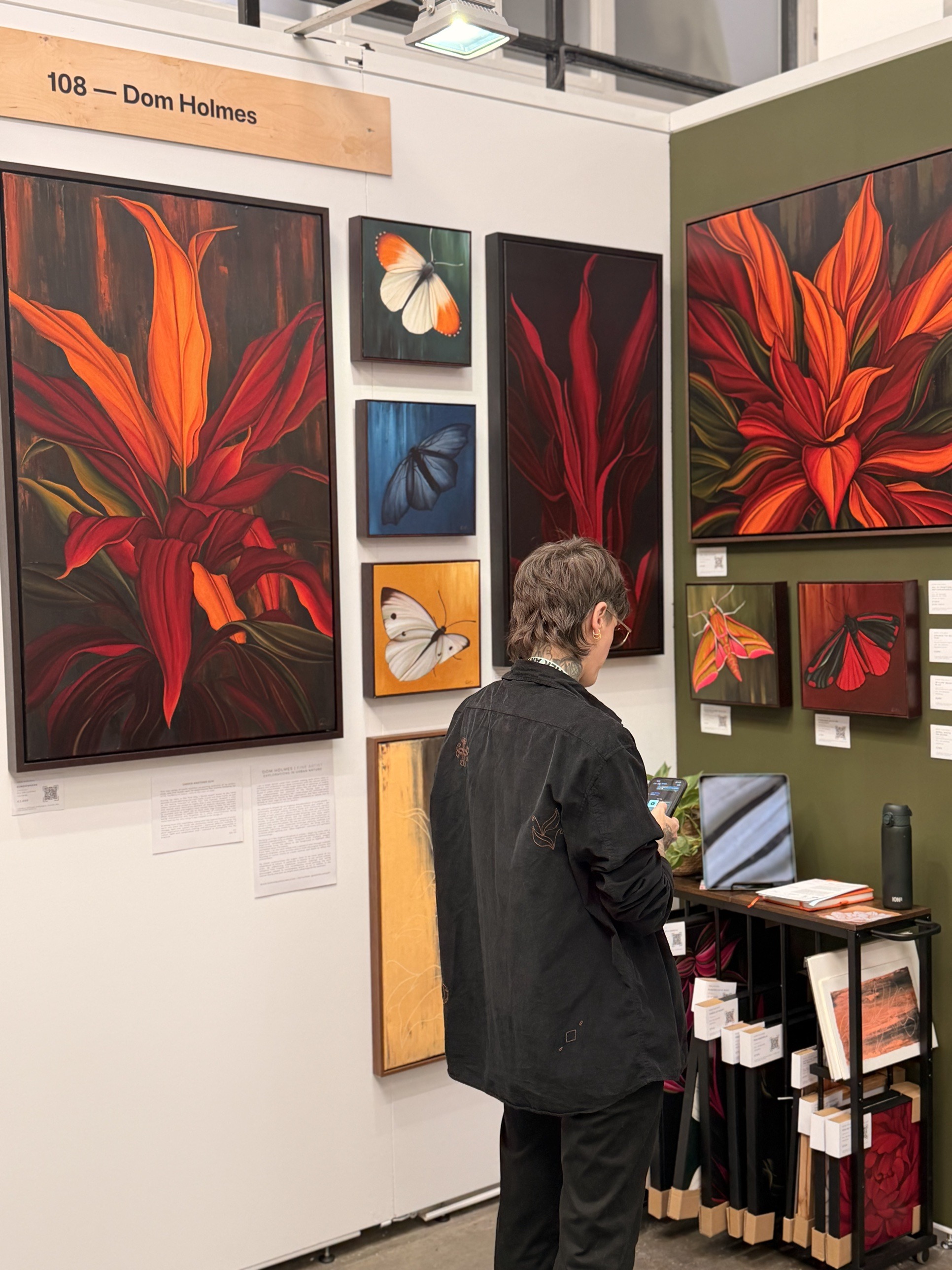
Once you have seen the till, the geometry of the place changes. Hundreds of artists, each on a numbered stand with a wooden board overhead carrying a name and a number — 21, 43, 88 — and one place to pay for all of them. You do not deal with the maker. You take a slip to a register, the way you would on any shop floor. The work on the walls begins to behave less like art and more like stock moving toward that till.
The economics are not hidden; you only have to ask who pays whom. The artists pay to be here. You apply, you are selected, and you book your stand — the wall is rented, and it is paid for before the doors open. The fair, which belongs to Saatchi Art, has been paid to stage the room whether or not a single canvas sells. Visitors pay at the door. And in the middle of the floor there is a bar, charging bar prices — a plastic cup of wine that would make sense in a West End interval but lands strangely in a crowd that looked, for the most part, young and careful with money. The risk of the wall stays with the artist. The room has already been paid for.
The walls tell a second story, quieter and harder to watch. The work that had clearly cost something — time, material, nerve — mostly stayed where it hung. The wood panels. A stand of hand-painted silk hearts with a card beside them that said, in a careful hand, nothing wasted: offcuts from larger pieces, old frames given another life. A frame of fifty-two playing cards, set and fixed under glass. People slowed for a second and moved on.
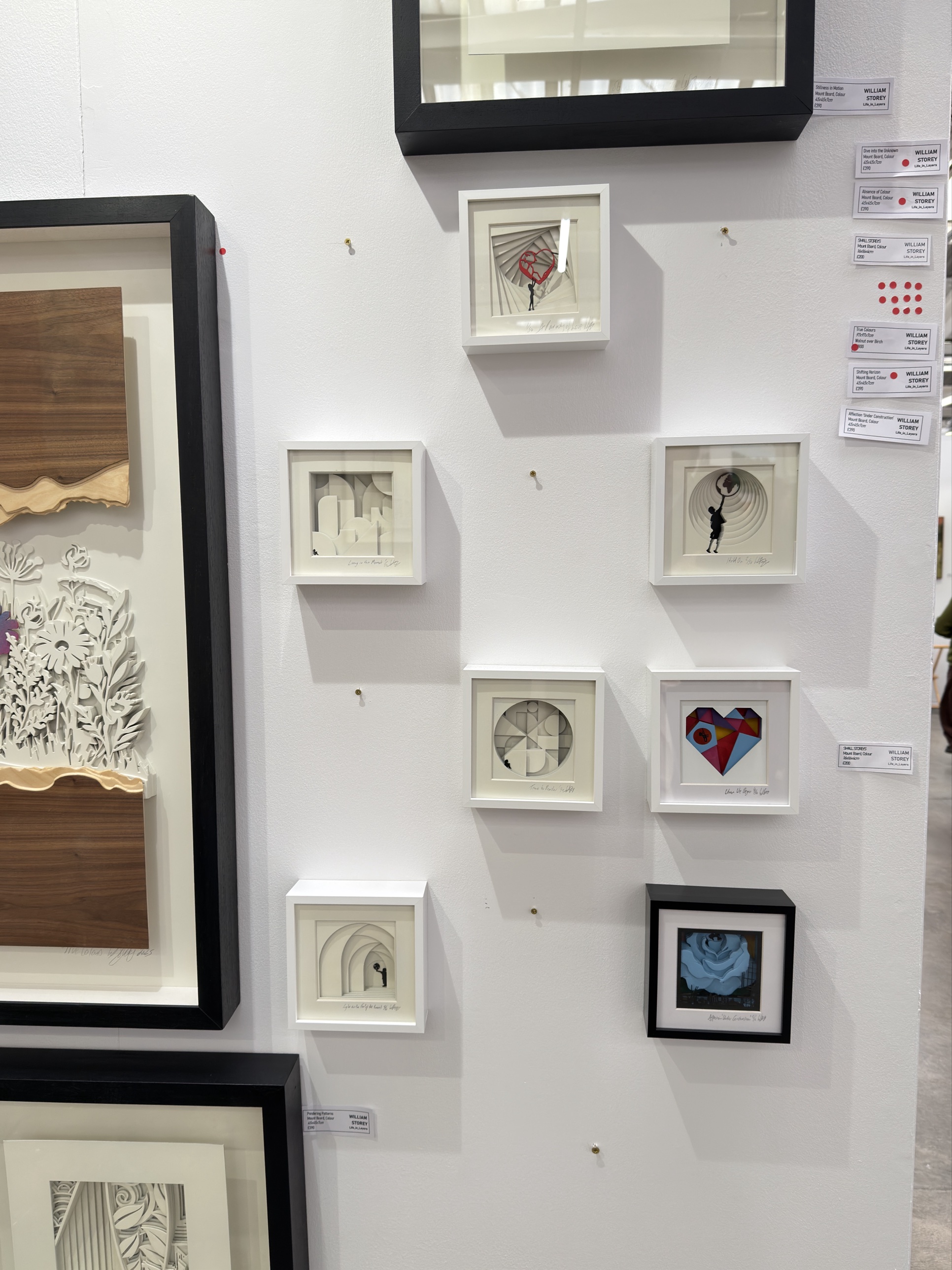
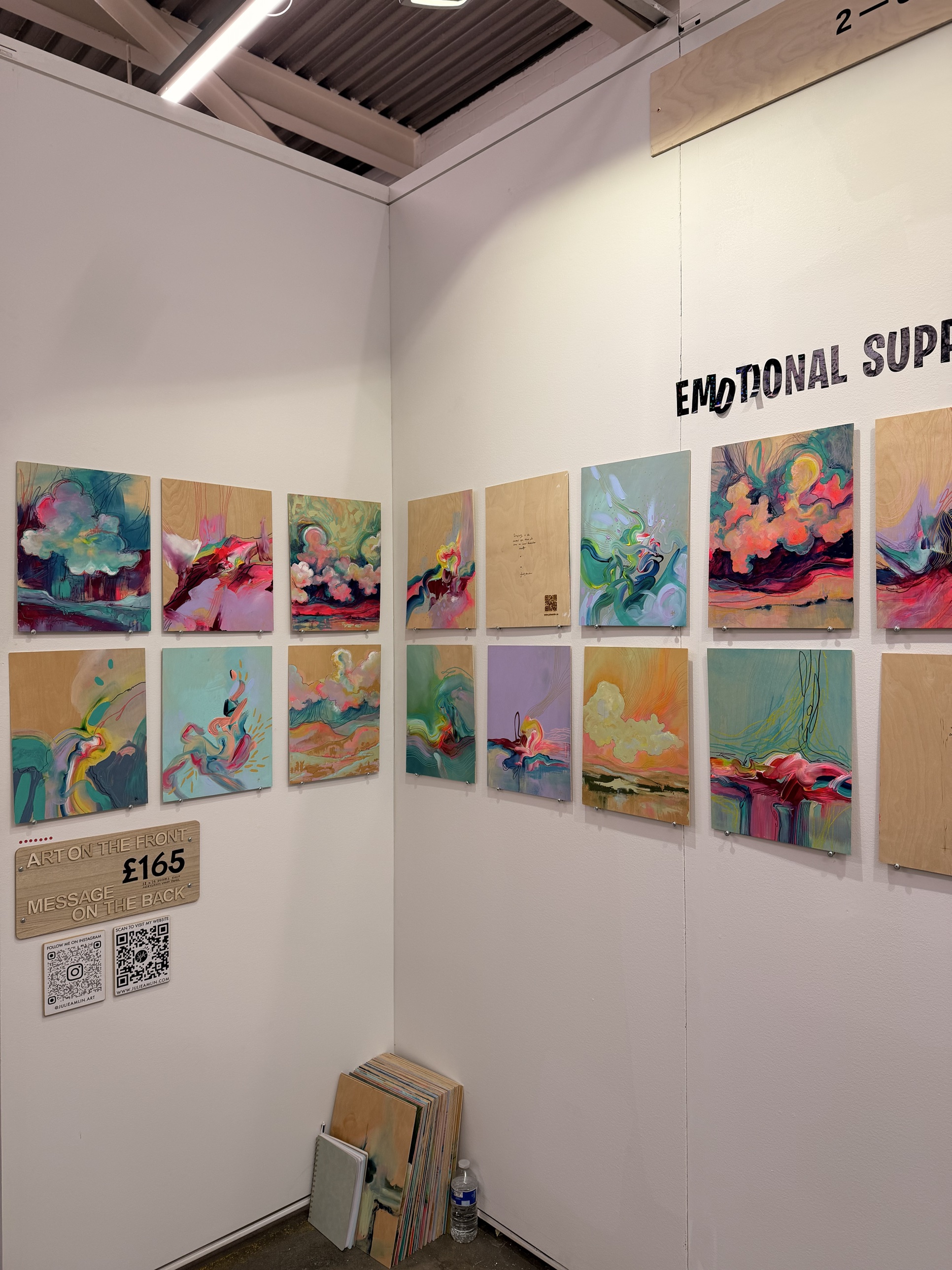
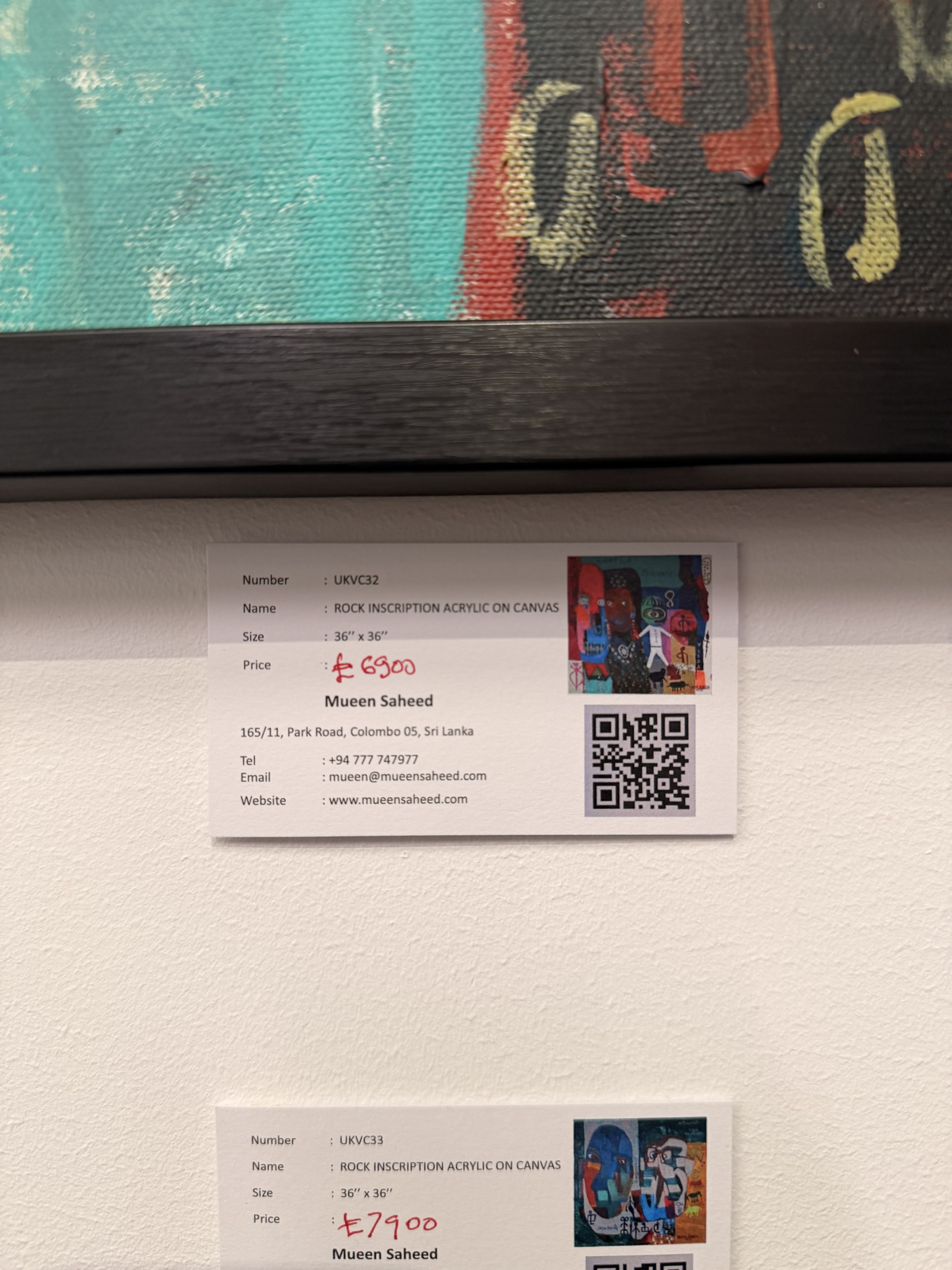
What actually moved was lighter and quicker to love. A rack of unframed prints in plastic sleeves, flicked through the way you flick through records, affordable enough to carry home that afternoon. Small bright canvases. Images that landed in a single glance — a photograph’s framing done in paint, a postcard’s palette — and asked nothing further of you. On several stands there were pale clean rectangles on the wall, patches where something small had already sold. The prices ran a long way, from a small painted board at £165 to a large worked canvas at £6,900, and it was the cheaper end that kept leaving. The considered work kept its place and lost the room.
The problem was never what people liked. It was how fast the room asked them to like it.
It points at what the fair is really selling, and it isn’t paintings. To the artist it sells a sentence they get to say about themselves — I am an exhibiting artist; my work hung in London; there is a listing, a community, perhaps the sale that changes the year. To the visitor it sells access: an original rather than a print, made by a hand, under a thousand pounds, carried out with a docket for a receipt. The art is what gathers both of them into one warehouse, so the room can be paid at the door, at the bar, at the till. The value in the building goes to whoever owns the frame — the brand, the room, the one till, the yellow sign — and only rarely to whoever made the thing hanging inside it.
None of this makes it a scam. For an artist without a gallery, renting a wall for a weekend and keeping most of what sells can be a fair bet; some people sell well, and somebody does leave holding a real thing made by a real person. The democratic line is true. It is also the advertisement, which is why the model lasts: disappointment is absorbed by the next cycle of applications and hope, while the few who did well become the reason others apply.
I keep returning to the man by the wood panels, standing near the yellow wall without quite facing it. The art was the bait; the frame was the business. He had made work that asked for time, and could not get the room to stop. The most honest object in the whole building had stopped everyone, and it was not a work of art. It was a sign, and it was telling the truth.
Pay here.
The Other Art Fair, The Truman Brewery, Brick Lane, London, 8–11 October 2026. Written and photographed by Reza Gheibi.