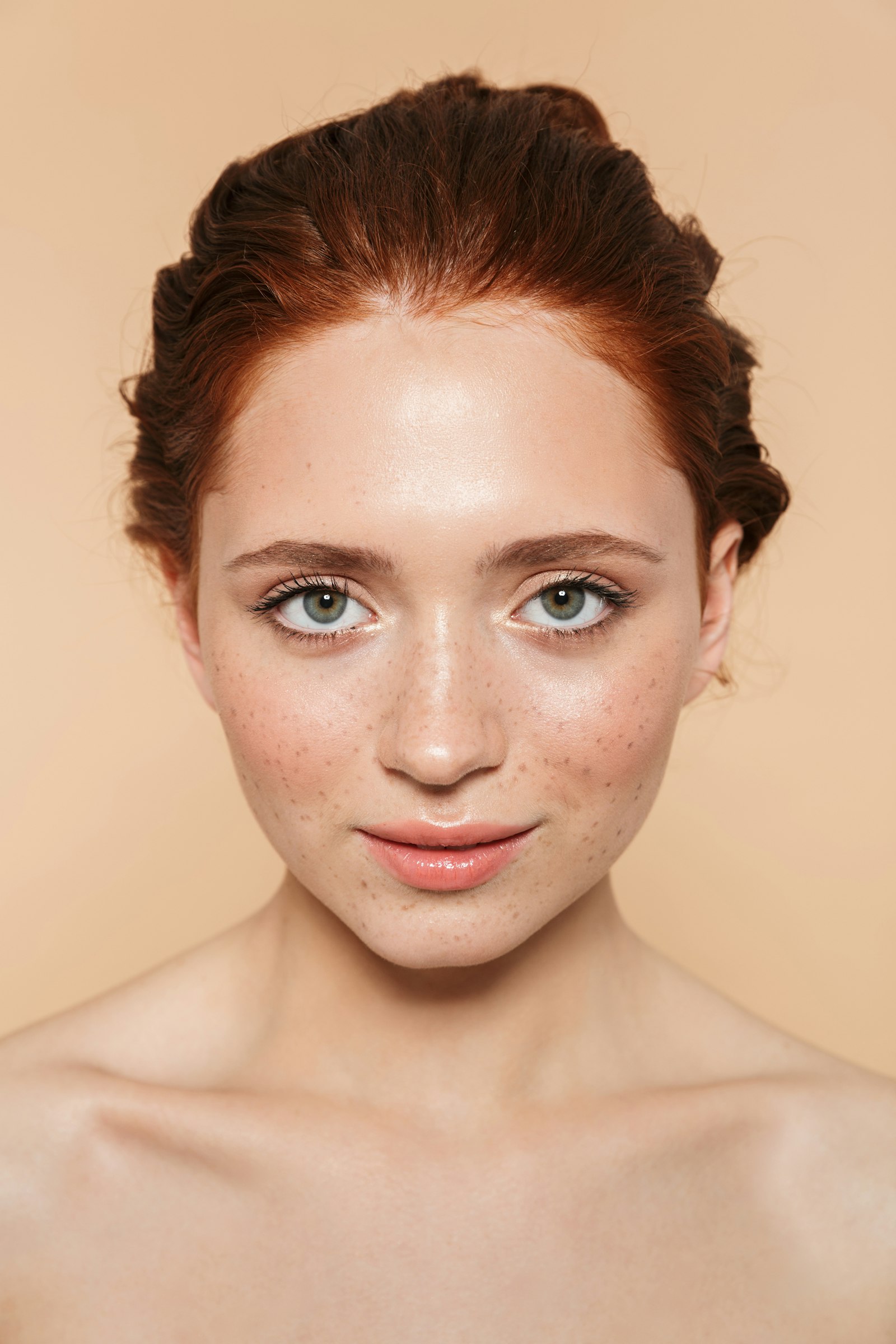
Filters promised to make every face better; they made a great many faces the same. As texture, age and individuality return, the real question is not what is beautiful, but what still makes a face belong to a particular person.
For a few years the filter was a novelty you could see. It smoothed a cheek, widened an eye, thinned a jaw, and left a faint plastic sheen you could catch and forgive. Then it disappeared into the camera itself. Correction stopped being something you applied and became something that was simply on — a default setting for the face, applied before anyone had decided to look. The striking thing was never that people used it. It was how quickly the corrected face stopped registering as corrected.
What followed was a quiet convergence. Millions of faces, each editing toward the same short list of ideals, arrived at a single destination — the poreless skin, the lifted cheekbone, the feline eye, the small nose and full mouth the critic Jia Tolentino once called “Instagram face.” It was sold as self-improvement and it worked as standardisation. The promise was to make each face better; the effect was to make a great many faces the same.
A standard, once reached, becomes legible — and legibility is the beginning of boredom. Shown the same optimised face often enough, the eye stops reading it as beauty and starts reading it as a setting. Somewhere in the last few seasons it began to. Casting directors asked for “real skin”; editorials rediscovered texture, freckles, the fine lines around a working actor’s eyes. “Unfiltered” became, briefly, a claim worth making — which tells you how rare it had become.
It would be comfortable to read this as a simple correction: artifice overshoots, the natural returns, balance is restored. It is not that tidy. Much of the return to “realness” is itself produced — a more expensive, more knowing styling that costs more time and better lighting than the smoothing it replaced. The grain can be as manufactured as the gloss. What is shifting is not a preference for one look over another; it is the ground beneath the question.
Because the filter did something subtler than flatter people. It severed the old link between a face and a life. A face used to be evidence — of years, weather, laughter, worry, the particular way a person had lived in their features; you could not fully separate how someone looked from what they had been through. Correction dissolves that link. It offers the face as an output rather than a record: adjustable, versioned, detached from any history. The pores, the lines, the grey return not as flaws that slipped through but as signals — that a face belongs to a specific person, and not to a template any face could be pushed toward.
This is where the real question sits, and it is not the one the industry asks. The industry asks what is beautiful, and answers, endlessly, with product. The harder question is quieter: when the tools can smooth, lift, age and de-age any face on demand, and the corrected version is free and everywhere, what still makes a face belong to one person rather than to the settings?
The answer is not perfection. Perfection has become cheap, and cheap things lose their power to mean anything. It is closer to specificity — the asymmetry a person carries, the expression only their face makes, the marks that read as theirs and no one else’s. Individuality was the thing beauty culture worked for years to sand away. It may turn out to be the scarce asset: the one quality a filter cannot manufacture, only erase.
None of this is really about makeup or skin. It is about authorship. For most of modern beauty the face was something done to a person — corrected toward a standard set elsewhere. The more capable the correction, the more the real decision moves upstream: not how do I fix this face but how much of this face do I want to keep. That is a different, and more serious, question — and it sits exactly where ELIN tends to look, where culture, image, technology and identity meet.
The filters are not going away; their promise, that any face can be brought to the line, has largely been kept. What is only now clear is the cost of keeping it, and the value of what the correction leaves out. A face that could have been anyone’s, and is unmistakably someone’s, may be the most expensive thing left to have.
Photograph: Unsplash.
ELIN FACE is an editorial series examining beauty, image and the changing ways we present ourselves.