NIGO’s first retrospective is usually read as taste and collecting. ELIN reads it through the decoy duck he made his mascot: proof that his real medium was the gaze, and that his most enduring construction may have been the self.
NIGO’s first retrospective is read everywhere as taste and collecting. It is closer to authorship — a man who made looking his medium, built a self out of found objects, and chose, as his emblem, a decoy: a thing made to be looked at and believed.
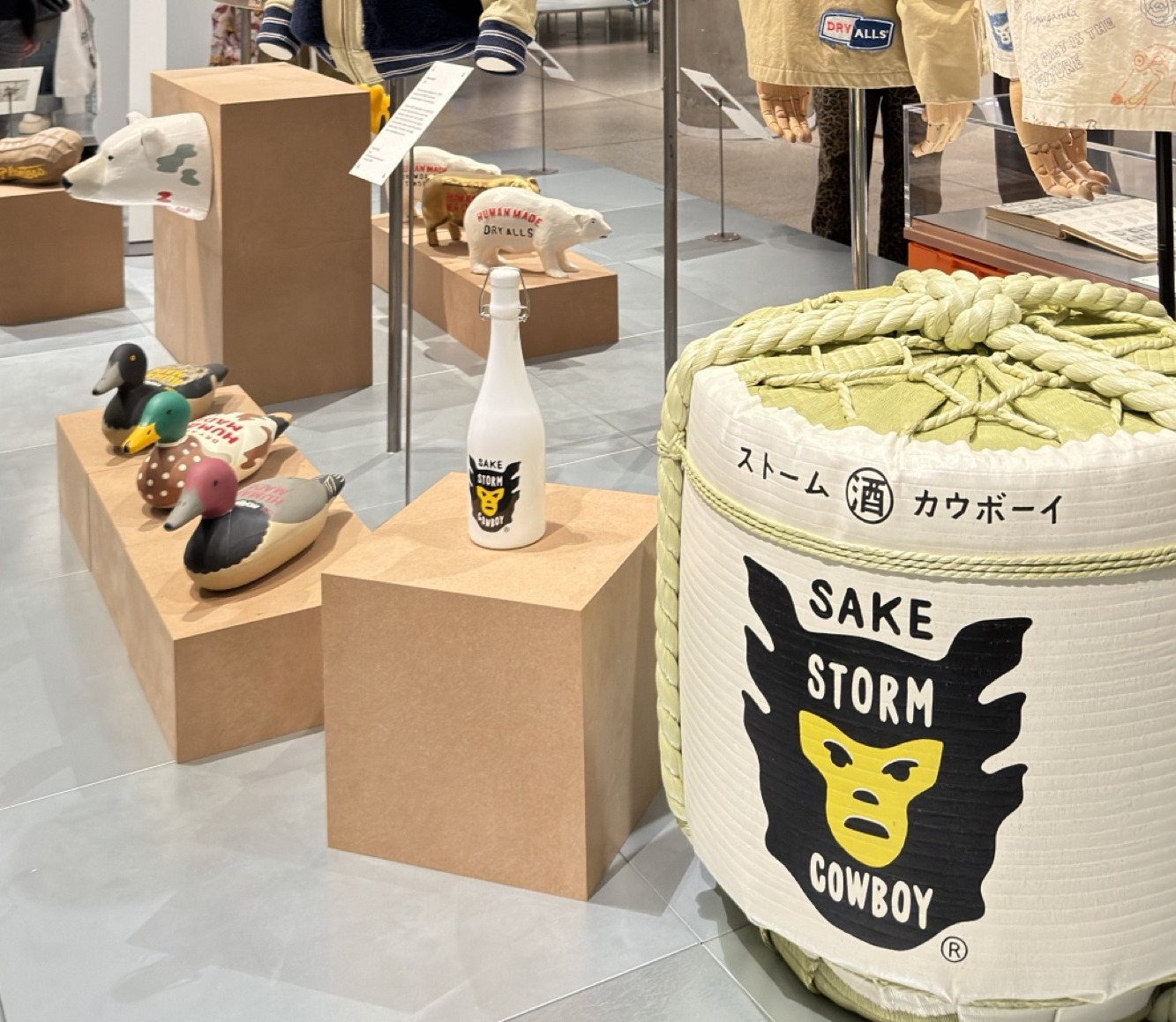
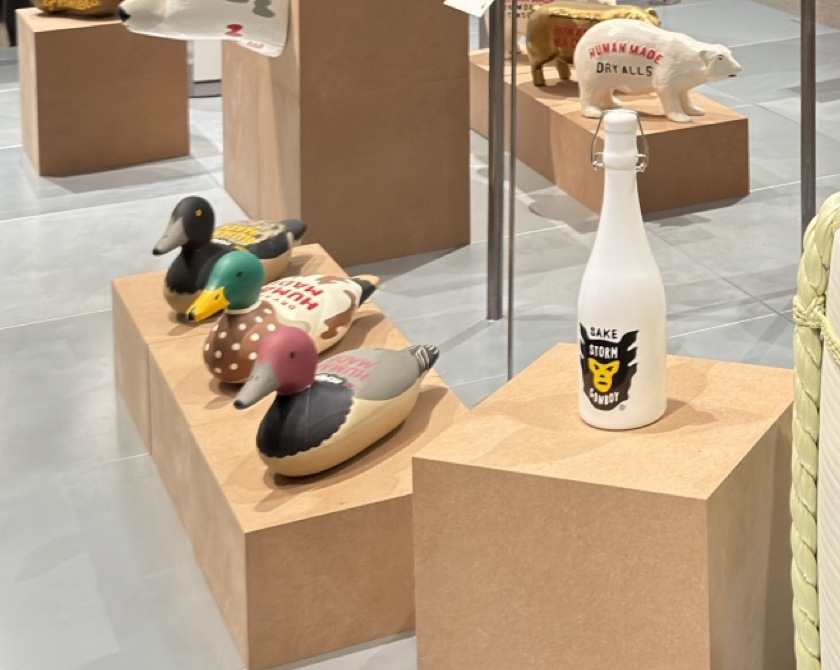
The most honest object in NIGO: From Japan With Love is one almost nobody stops for. On a low plinth near the Human Made room sits a wooden decoy duck. A decoy has one job — to be looked at and mistaken for the real thing, to lure — and, a wall text notes, it is also a piece of American folk art, utility and craft in one. NIGO adopted it as a mascot. Start there, because the duck gives the show its method.
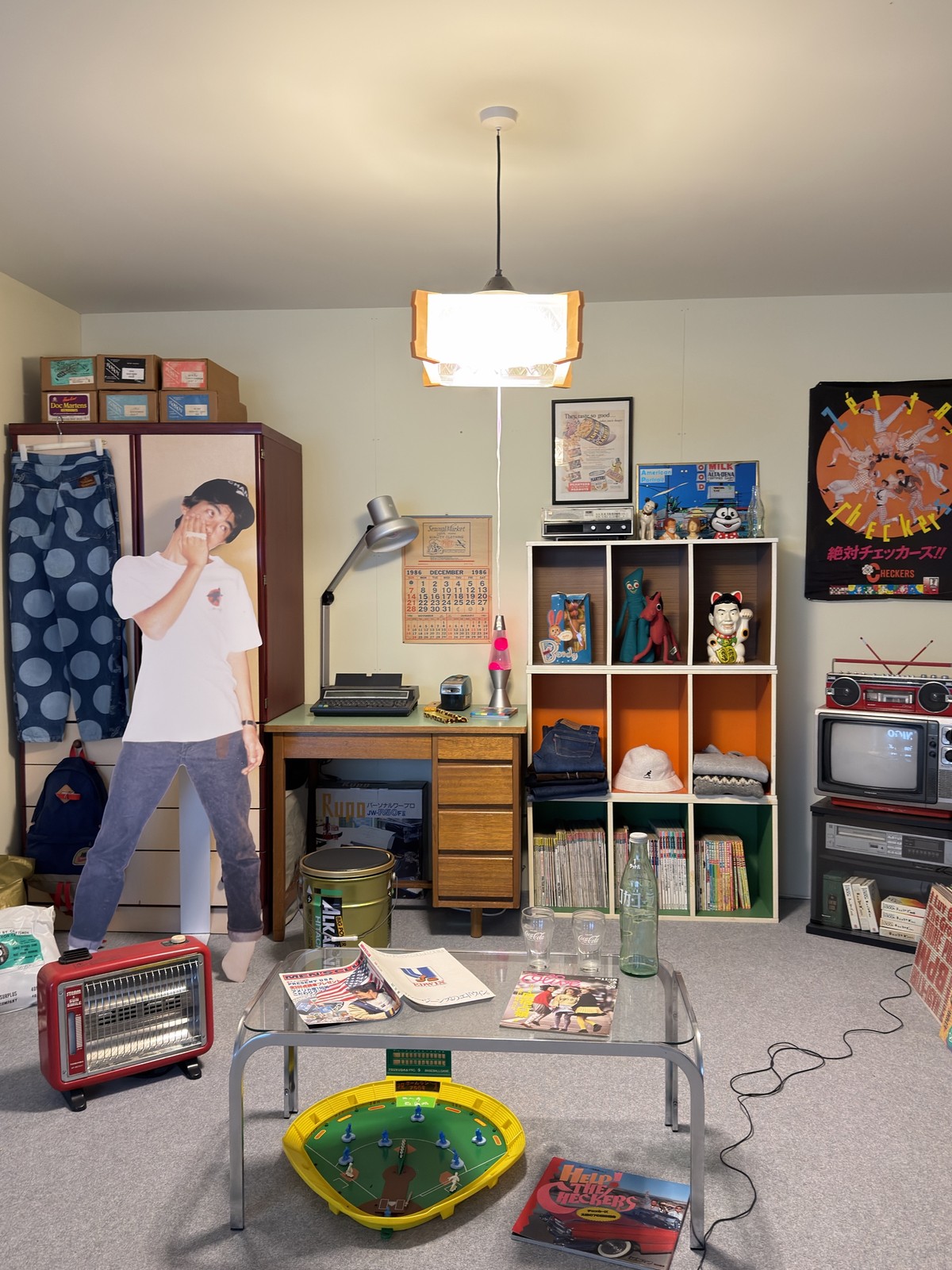
Every profile reaches for the word collector, and the retrospective invites it: rooms of jackets, toys, records, sneakers, ceramics, a recreated teenage bedroom. But “collector” is the least interesting thing here. What the show documents is a man who made a way of looking his primary medium, became the figure that way of looking implied, and — unlike his imitators — never pretended the result was anything but assembled. He is not a naive collector. He is a connoisseur of the lure.
Three things in the room give the method away.
The first is his name. The nickname is usually explained as number two — he was dubbed “Hiroshi Fujiwara number two” for his resemblance to his mentor, the stylist Hiroshi Fujiwara. The second Hiroshi; the copy. The man whose entire practice is re-presenting found things began as a found thing himself, an identity assigned by resemblance. Tomoaki Nagao did not only make readymades. He became one.
The second is the name of his first company. A Bathing Ape takes its image from Planet of the Apes and its phrase from a Japanese idiom — an ape bathing in lukewarm water — a jab at the comfortable, complacent youth who were, precisely, his customers. He built a label and named it, half homage and half mockery, after the soft appetite he was selling into. Its identity, like his own, is a found image folded over a joke the buyer isn’t quite in on.
The third is the duck. Of all the objects he might have made his signature, he chose the decoy: the beautiful fake, the thing whose craft exists entirely to deceive. A man who manufactures desirable surfaces took, as his emblem, the purest manufactured surface there is. It is not hidden: it sits on a plinth, labelled, in plain sight.
You can see where the looking was trained. He was born in Maebashi, north of Tokyo, in 1970, and came of age in a 1980s Japan still soaked in a borrowed America — the residue of the post-war occupation, by then restyled as rebellion and given a name, ametora, “American traditional.” He bought his first fashion magazine, a women’s title called Olive, only for a feature on his favourite band; he stayed for the clothes, then moved on to Men’s Club and Popeye. He learned the world as an image on a page before he ever handled the object. “A lot of things are hidden in the past,” he has said — he looks in that direction to find the new. Human Made runs on the same motto: the future is in the past.
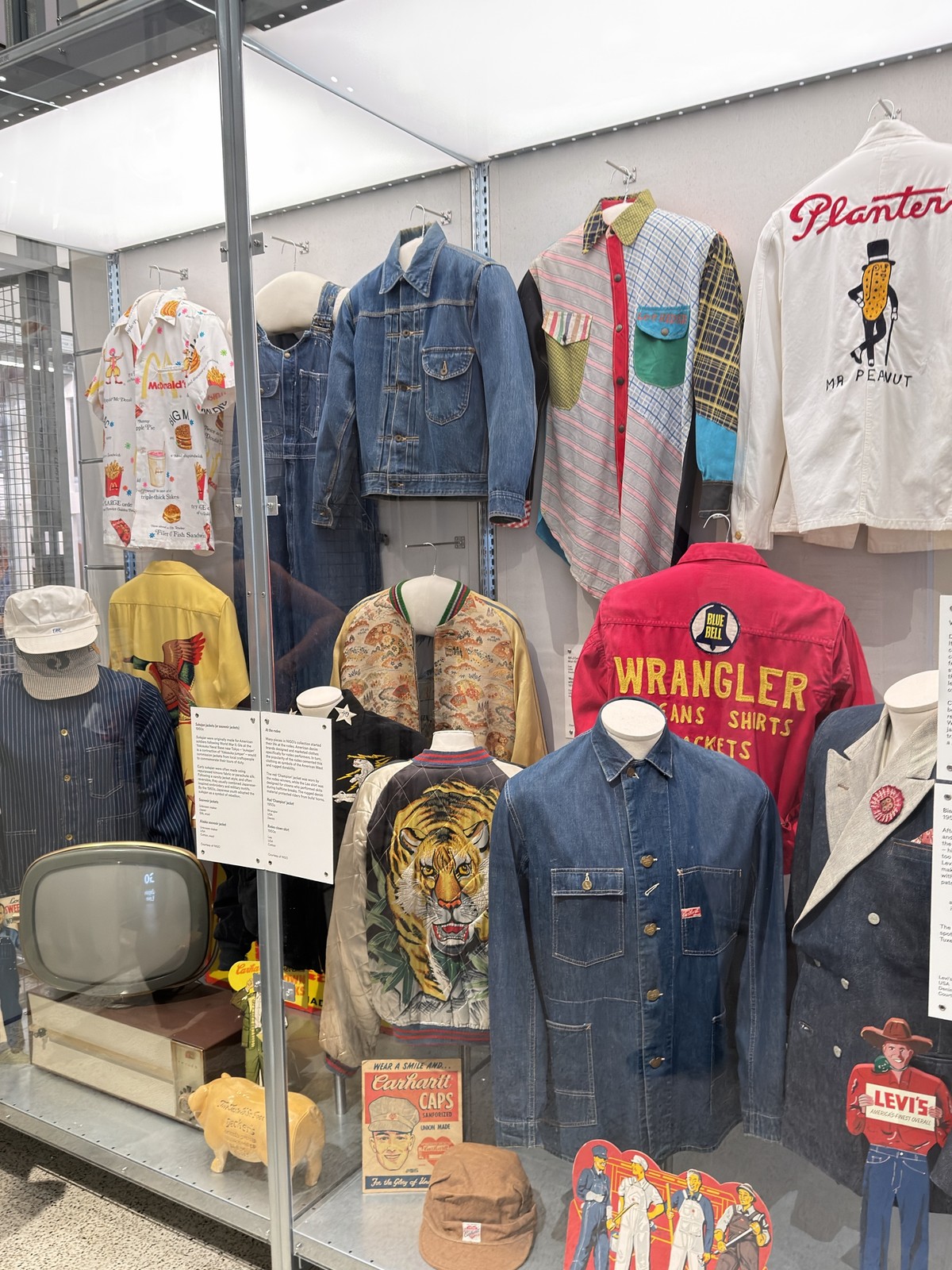
What the trained eye does to an object is specific, and it is the actual art. He takes things built to be anonymous — military surplus, workwear, the sukajan sewn for homesick American servicemen near Yokosuka, mass-market Americana made for use and forgetting — and, by the sheer consistency of his attention, gives them the one quality they were never meant to have: singularity. A duck-hunter camouflage, a disposable hunting layer, becomes the DNA of a camo that would define a brand. It is close to the reverse of what we are told happens to things. Mechanical reproduction is supposed to drain an object of its aura; NIGO runs the machine backwards, finds the auraless, and puts the aura back.
Which is why the brands are the wrong place to look for the achievement. A Bathing Ape, Human Made, the Louis Vuitton collaboration with Virgil Abloh, the Kenzo appointment — the industry reads these as the career. The show argues the opposite: they are exports of the gaze, reproductions of a way of seeing that already existed, whole, in a boy sorting through other people’s cast-offs. The eye is the original. The products are its merchandise.
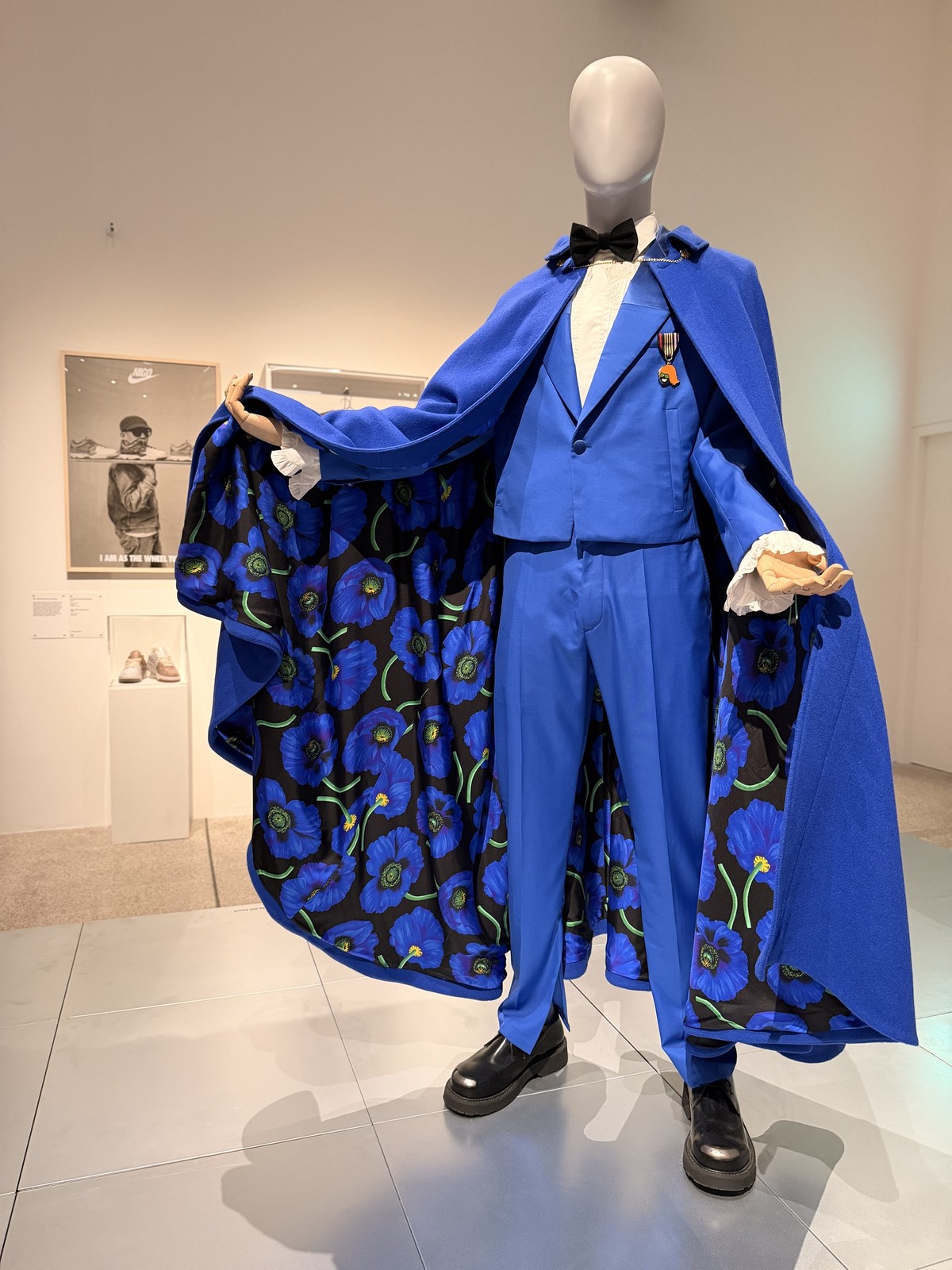
The Kenzo room is where the thesis is tested, and the test object is borrowed three times over. The electric-blue cape everyone photographs is not a NIGO design in any simple sense: it is a 1984 Kenzo tuxedo from the house archive, recoloured electric blue at Kid Cudi’s suggestion for the 2022 Met Gala, and lined underneath with Kenzo’s own poppy. Three authorships in one garment — the archive, NIGO, the rapper — with the seam deliberately left showing. The real question at Kenzo was never “streetwear into luxury.” It was whether a gaze trained on other people’s objects could be turned on someone else’s house without flattening it into one more thing to collect. That is the sukajan problem at couture scale, and he has been working it since he was a teenager.
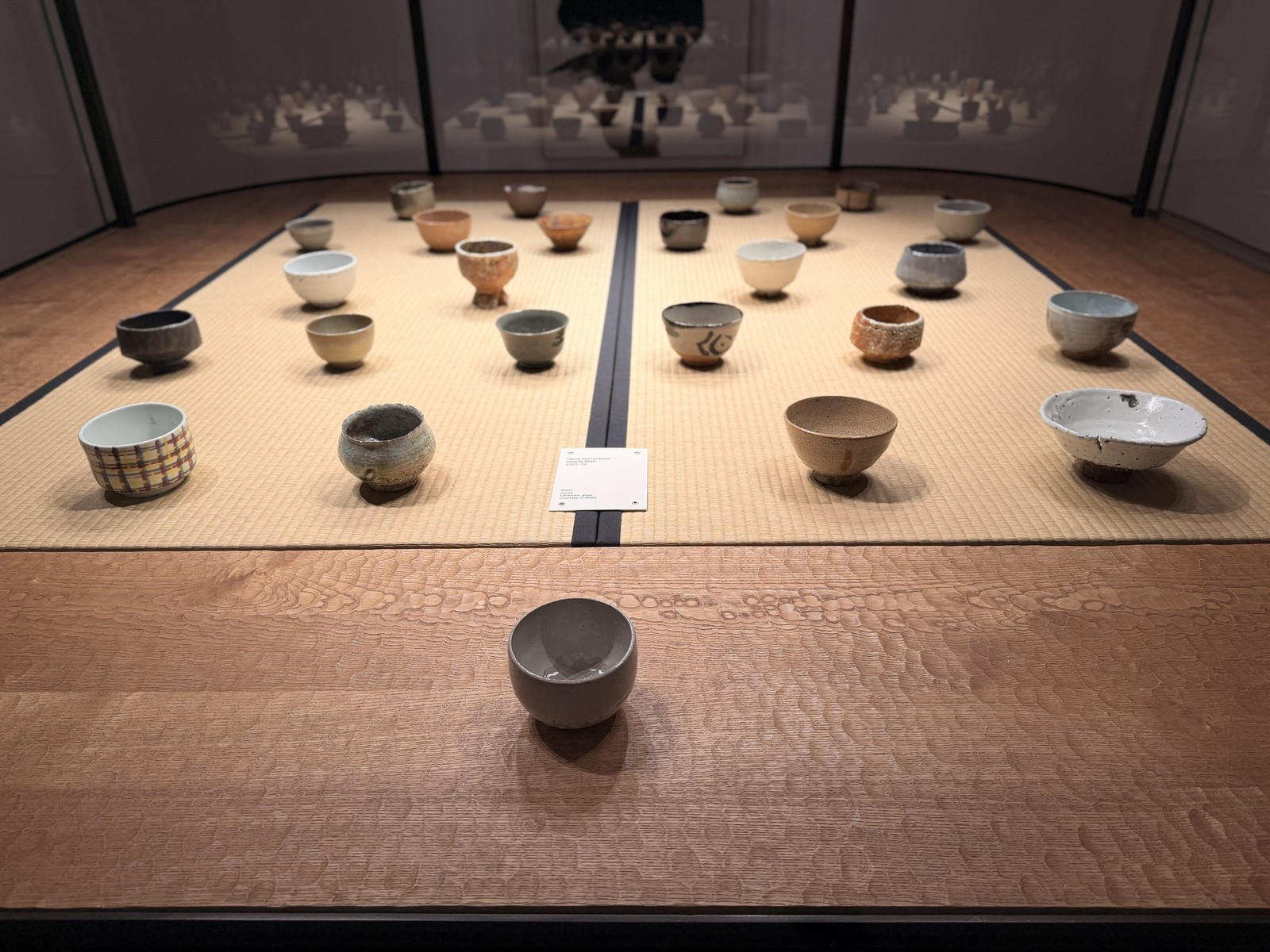
Then, at the end, the one room where he makes rather than selects. Twenty-five tea bowls, thrown by his own hands between 2023 and 2025, set out on tatami — modest, uneven, almost anonymous. After a lifetime of conferring singularity on found objects, he makes objects of his own and, pointedly, makes them plain. It reads as a private test: can a thing made by the eye hold the charge the eye used to find in things made by strangers? That is the oldest anxiety of the curator who wants to be an author, and the bowls are him asking it in clay.
None of this is flattery, and the show carries a risk it will not quite name. A wall panel calls it “the NIGO effect” and means it as praise: fans became collectors, and a resale market grew up around vintage NIGO. Read it the other way and it is the decoy at scale — a gaze so strong it manufactures new lookers, turns the act of looking into a product line, and sells singularity back as a drop. The man who restores aura to forgotten things is also the man who learned to mass-produce it. The exhibition celebrates the eye; it does not ask what happens when the eye is for sale.
There is one rhyme the show leaves unspoken. As a teenager, NIGO wanted to study in London — he looked first at Saint Martin’s — but his parents would not let him move abroad, and he went to Bunka, in Tokyo, instead. Forty years on, the city that did not take the student has given him his first retrospective. The boy who learned the world from imported magazines is now the imported object, lit behind glass in the place he once wanted to go.
He did not design clothes and become famous. He designed a way of seeing, trained it on found things, and understood — more honestly than the people who copy him — that a name, a brand, a self are also found objects, assembled and presented to be believed.
The decoy was never a mascot.
It was a self-portrait.
NIGO: From Japan With Love, the Design Museum, London, 1 May – 4 October 2026. Written and photographed by Reza Gheibi.