At V&A East's free Why We Make galleries, access succeeds. Attention is another matter.
The sign above the entrance is made of white strip lights against a wall of red tiles: WHY WE MAKE. Beneath it, in a lit case, sit an Anti Nazi League carnival poster and a flyer for Rave Against Racism. Beside them are glass doors. They open without a ticket.
That matters. Why We Make, the permanent collection at V&A East, is free to enter, free to move through, and free to leave without having looked very closely at all.
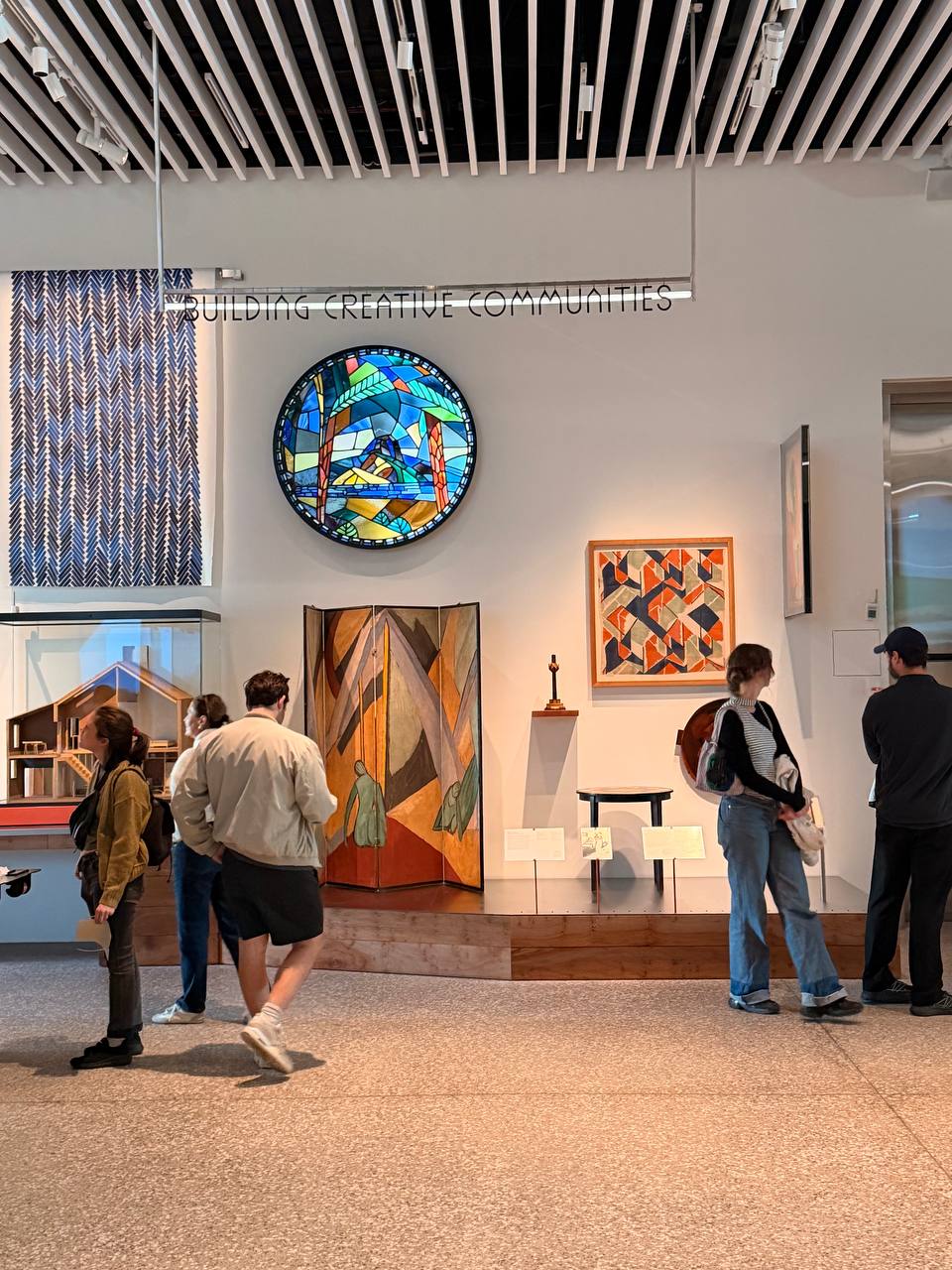
The collection occupies two galleries, one above the other, and brings together more than five hundred objects from the V&A’s holdings. Its range is wide: a Jain map of the universe, Extinction Rebellion patches, an Eileen Gray rug, a Walthamstow football shirt. The arrangement is careful and confident. Cases are lit from within. Labels are short and legible. The section headings are plain: Empowering Through Design, Crafting Stories, Building Creative Communities, Breaking Boundaries, Our Place in the World.
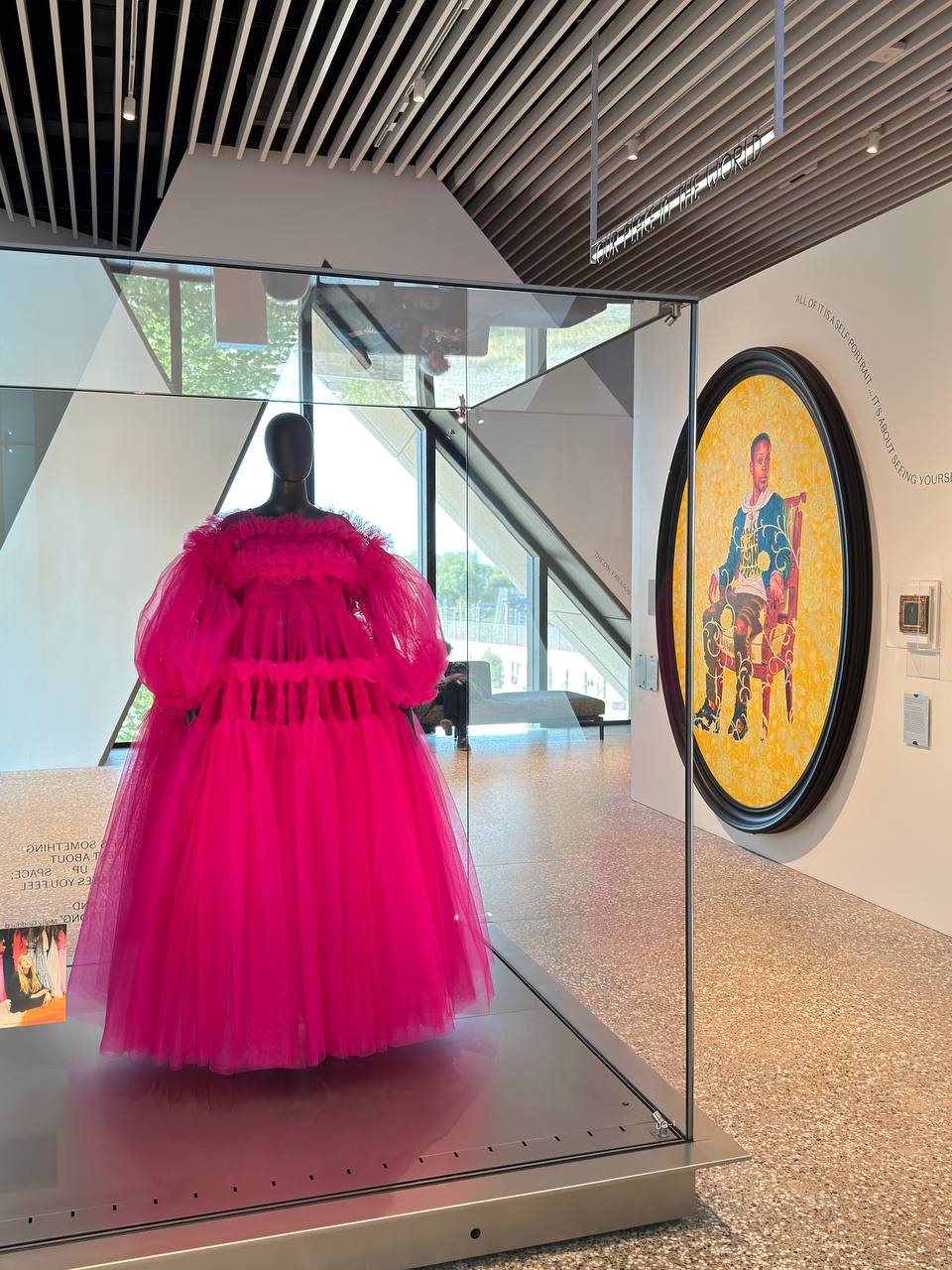
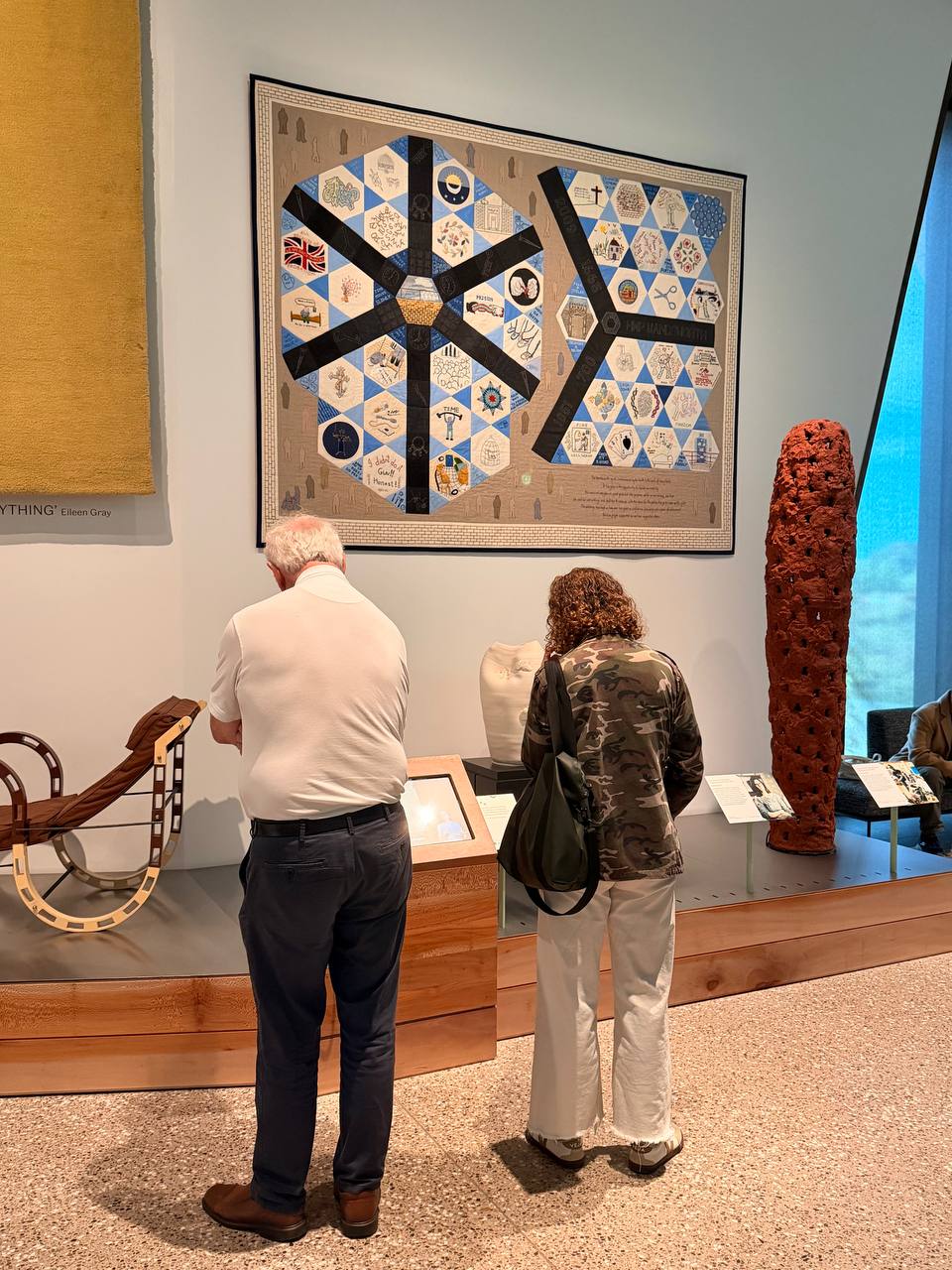
The materials change every few steps: cotton, glass, paper, wood, latex, sequins, tulle. A stained-glass roundel hangs above a painted folding screen. A plywood model of a house sits under glass beside a wall of printed textiles. A quilt stitched with the words HMP Wandsworth appears near a chaise longue. In a tall case, a Molly Goddard dress in pink tulle stands close to a large round portrait of a young man seated on a carved chair, framed like an old master.
Some of the strongest moments are almost silent.
A painting of Mount Shatrunjaya, made in India between around 1870 and 1900 by an unrecorded maker, belongs to a Jain tradition of pilgrimage paintings. Its label explains that such works were hung in temples during pilgrimage season so that people unable to travel could still make the journey in imagination. A QR code offers a recording by a Jain nun and scholar, with transcripts in Gujarati and Hindi.
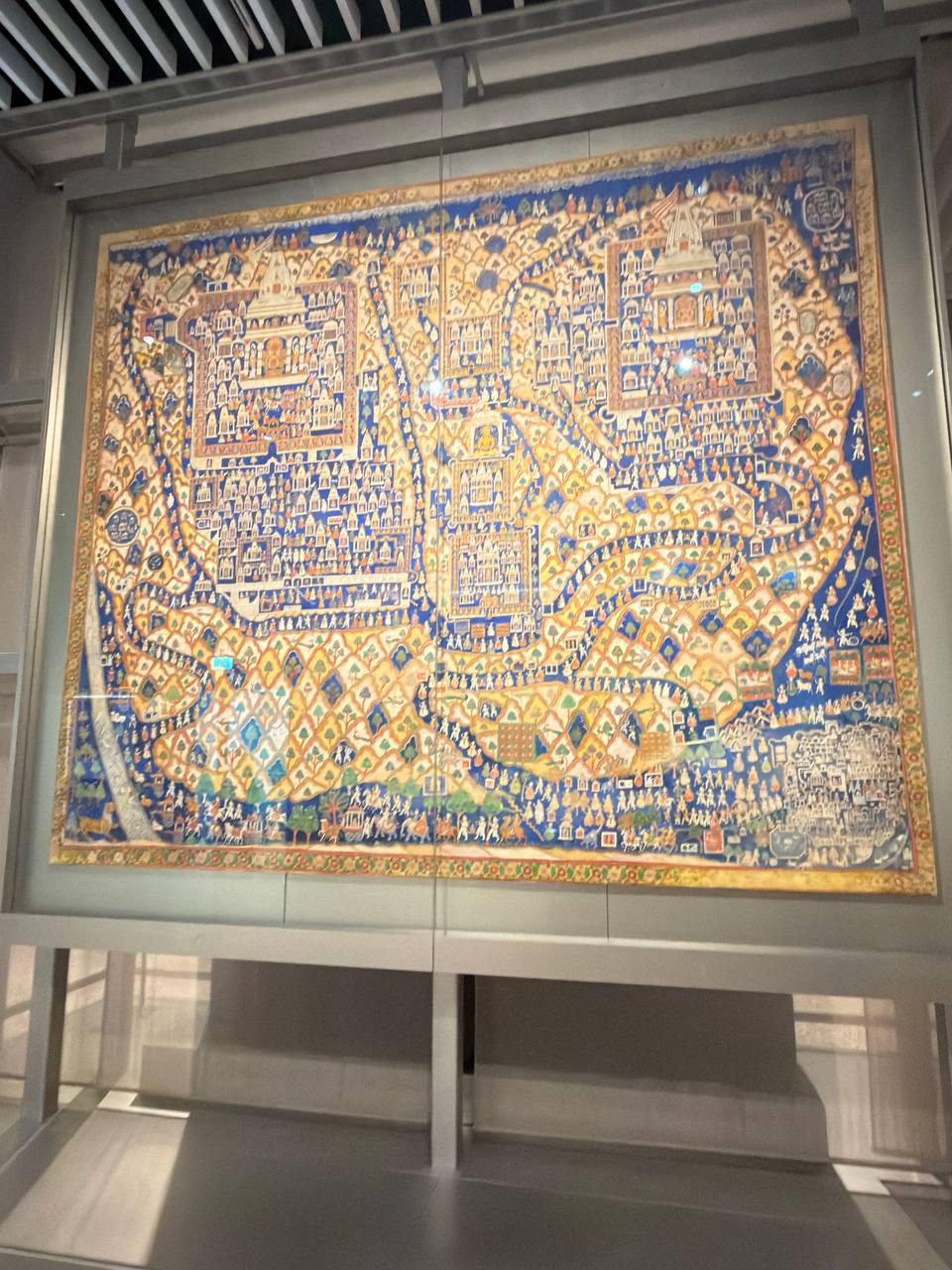
It is a small, generous piece of museum work: an object once used to help people arrive somewhere without physically going there, now placed inside a building that asks nothing of anyone at the door.
On a Sunday afternoon, the building was full.
The attention in it was not.
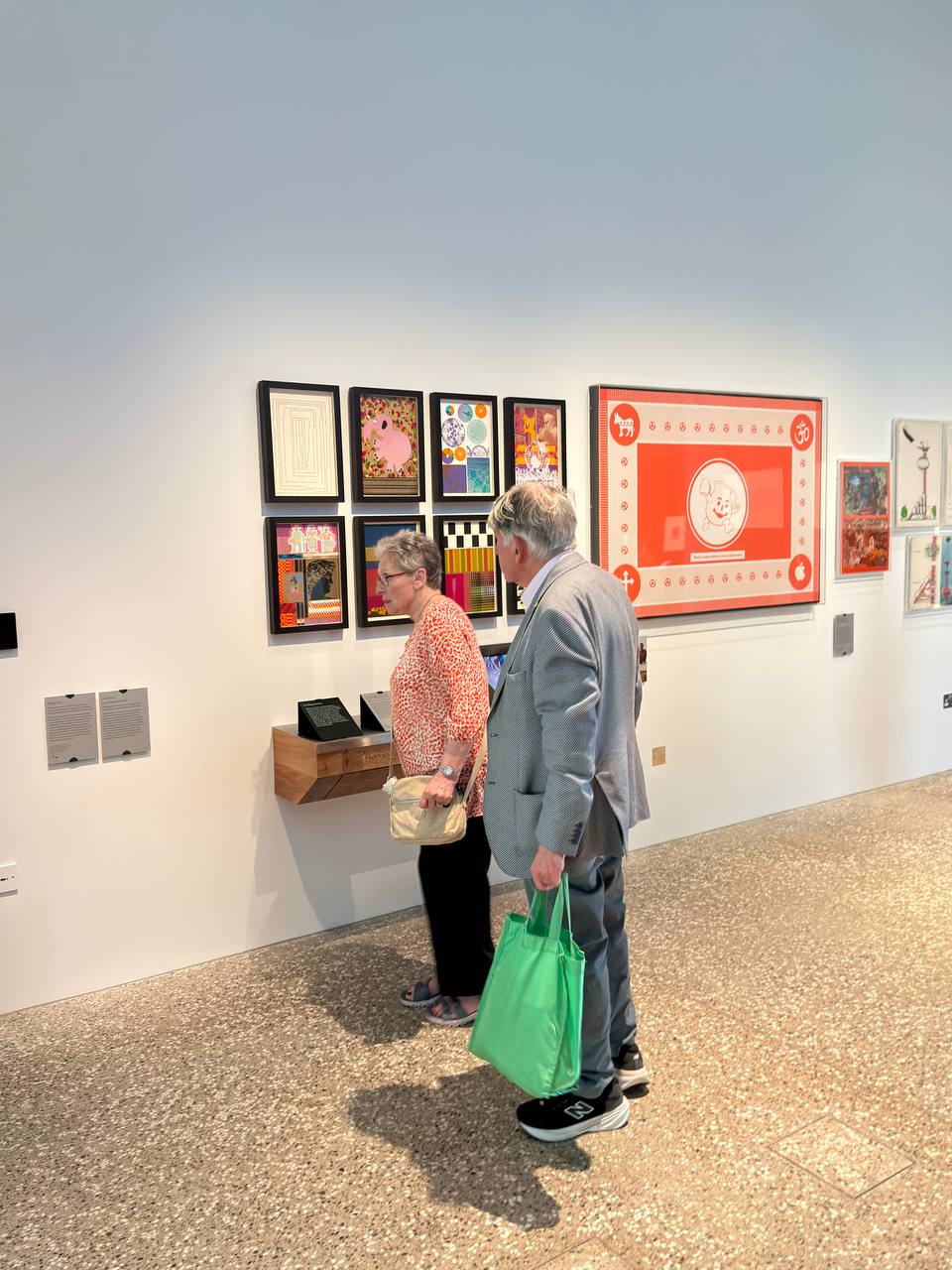
Perhaps a fifth of the visitors were looking closely. They fell roughly into two groups. Students, some with notebooks, moved slowly along the walls and read the labels. Older visitors, many in pairs, stopped in front of printed textiles or framed works and spoke quietly to one another.
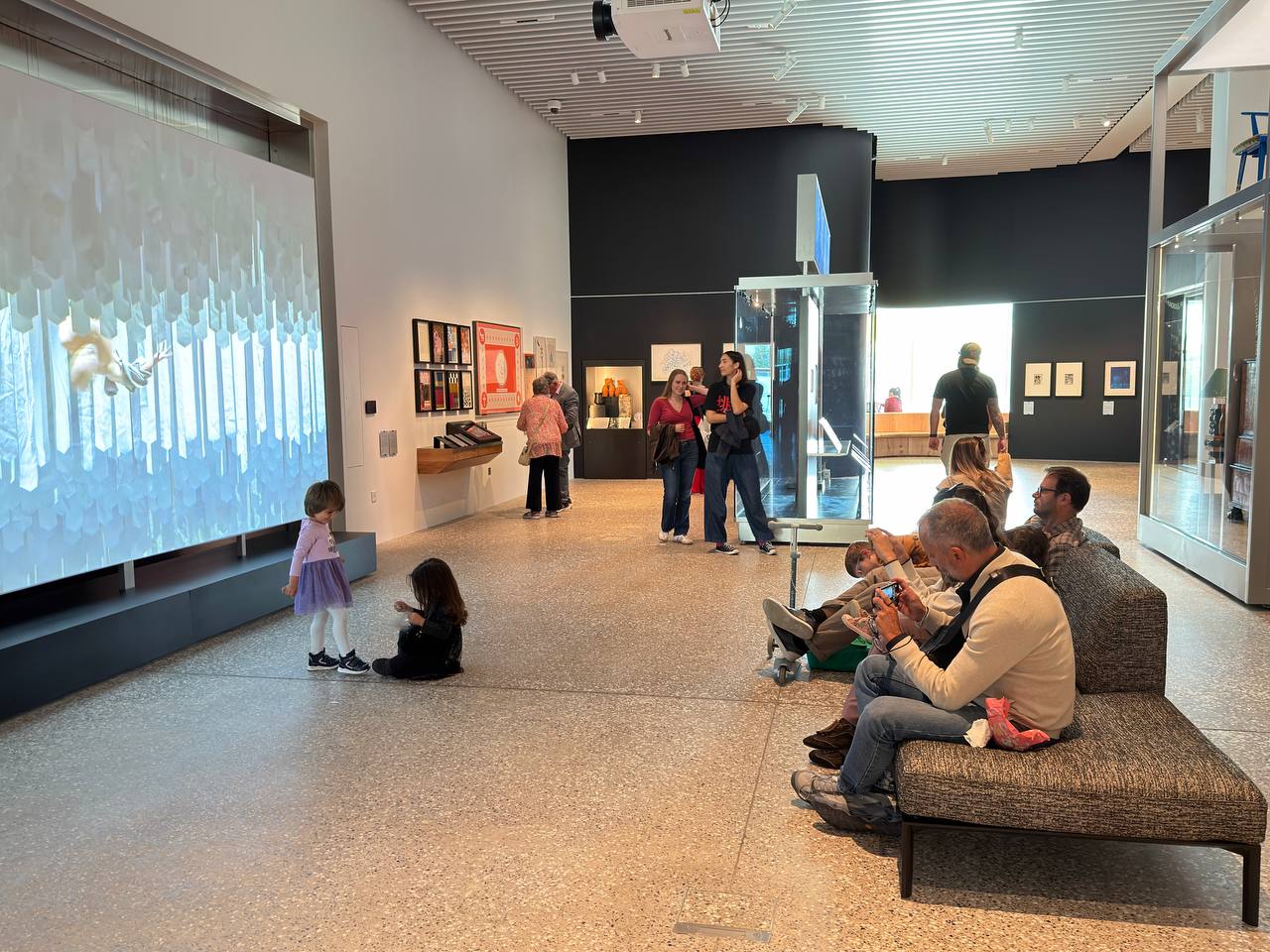
Most other people were using the galleries differently.
Families made up much of the crowd. In front of a wall-sized projection, two small children sat on the floor with their backs to the screen. On a long upholstered bench nearby, parents rested: one scrolling a phone, another with a child stretched across their lap, a scooter parked against the seat. A play area was busy. A mother rocked a pushchair and fed her baby. The noise level was high, and most of it came from children.
None of this is a complaint.
A free museum in a new district, on the edge of the Olympic Park, should be the kind of place a family can enter on a Sunday afternoon without planning, paying or performing interest. The galleries appear designed for this. They welcome play as well as contemplation, rest as well as study, use as well as attention.
But the effect is worth describing plainly. In much of the space, the objects were not the point of the visit. They were the setting for it.
People came for shelter, warmth, safety, space, and something interesting to be near. The collection became the atmosphere around an afternoon out. A screen became something to sit in front of. A bench faced a case of inlaid wooden cabinets, and nobody on it turned round.
The labels in Breaking Boundaries and Our Place in the World speak of identity, pressure, self-portraiture and being seen. One wall text says, in part, that all of it is a self-portrait, and that it is about seeing yourself. Nearby, a toddler in a purple skirt turned in circles while a man photographed his child rather than the room.
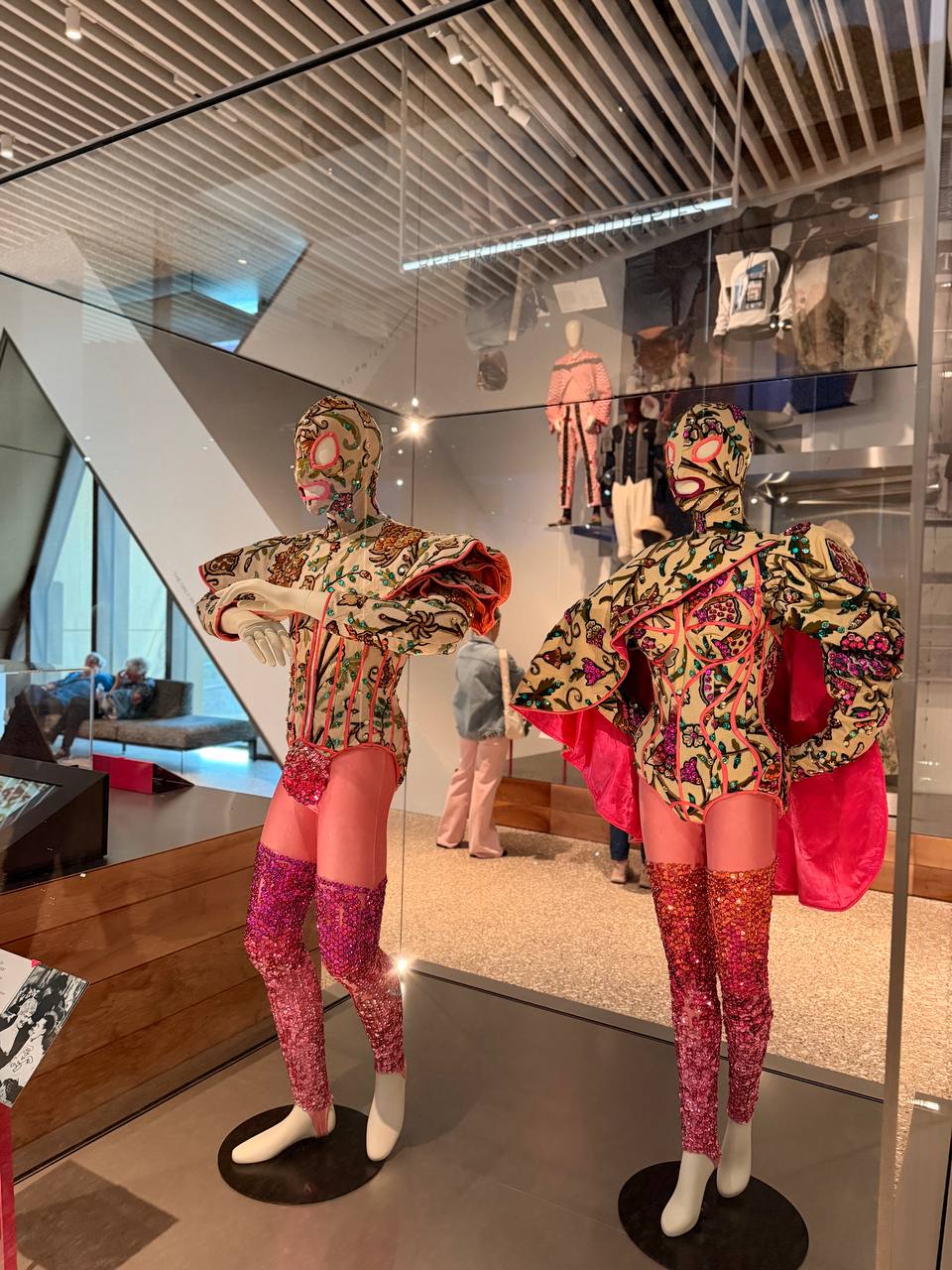
The two forms of use did not seem to disturb each other. The student at the textile wall kept reading. The couple in front of the framed prints kept talking. The children kept playing. The galleries held attention and distraction in the same even light.
That may be the real achievement here, and also its limit.
Why We Make answers its title generously. People make things to tell stories, build communities, protest, remember, decorate, repair, belong, and be seen. What the museum cannot control is what happens once those things are made public.
On a Sunday in Stratford, many visitors did not come primarily to look. They came to be somewhere. The museum let them, and that generosity is part of its public value.
But it also leaves a harder question behind: when culture becomes fully accessible, what makes anyone stop long enough to receive it?
Why We Make is at V&A East Museum, 107 Carpenters Road, London E20 2AR. Free, no booking required. Open daily 10:00–18:00, with late openings until 22:00 on Thursdays and Saturdays.
Visited 20 September 2026. Reporting and photographs by Reza Gheibi.