The vocabulary of ‘beauty after forty’ frames age as an enemy. The more precise change is less in the face than in how it is read — and in who gets to decide whether that record counts as authority or as damage.
The phrase arrives pre-loaded. Say “beauty after forty” and a whole vocabulary assembles behind it — anti-ageing, ageless, youthful, defy, maintain, reverse. Almost every one of those words frames age as an opponent and the face as territory to be held. It is worth pausing on that grammar before accepting it, because the grammar is already making an argument: it has decided that beauty peaks and is thereafter defended, and that the story of a face past a certain point is one of loss, managed with more or less skill.
That framing is so complete it reads as description rather than opinion. It is opinion. The more precise thing that happens to a face around this age is less decline than a change in how the face is read.
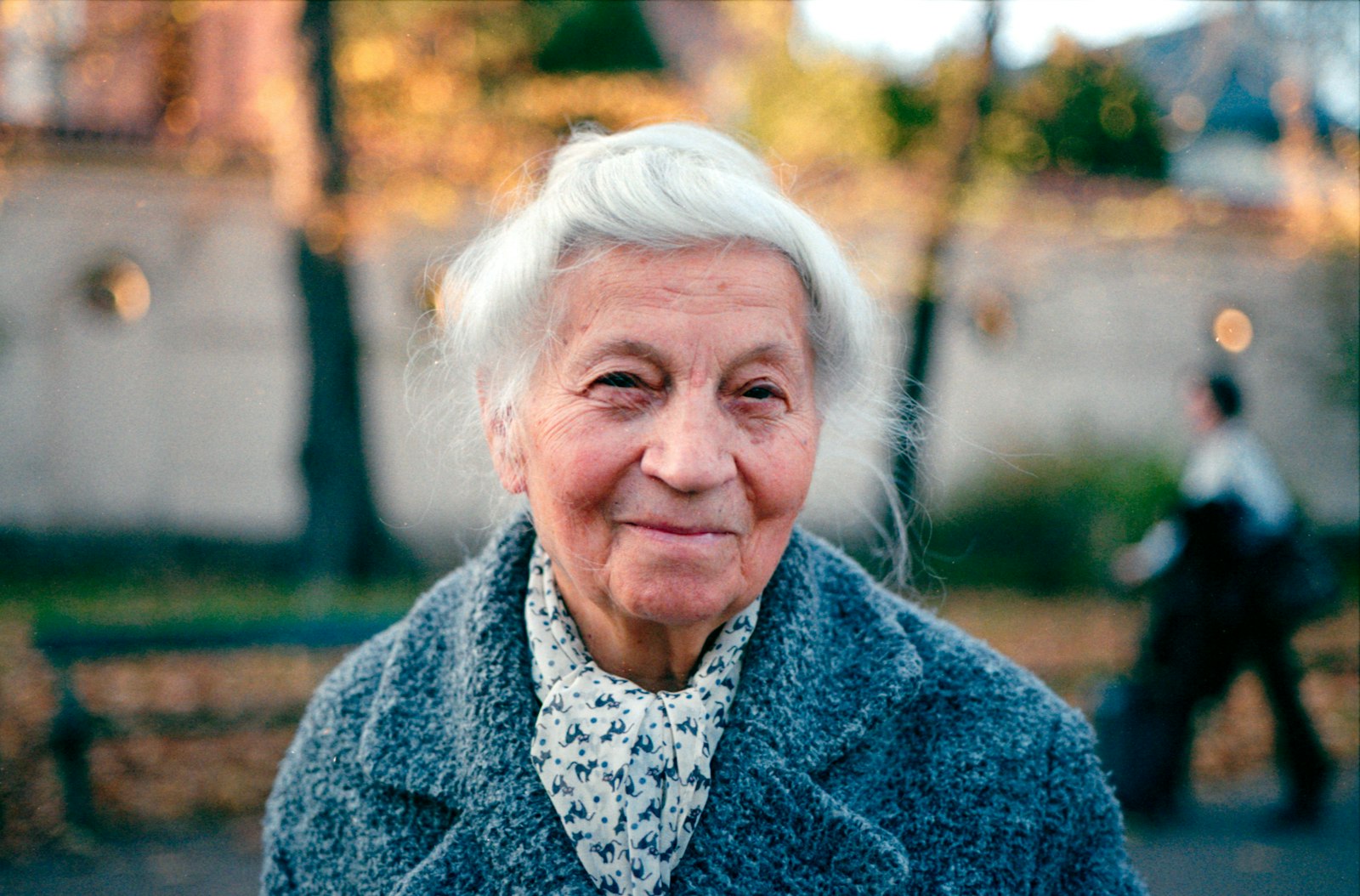
A younger face tends to be read through possibility — taken as a promise of what it might become, whom it might turn into. An older face is more readily read as evidence: a record of what has actually happened — weather, work, laughter, loss, the particular way one person has lived inside their own features. A face at twenty is still widely read as open-ended. By fifty it carries more visible history, and reads as more specifically someone’s.
Here is the tension. Specificity was supposed to be the valuable thing. Much of the last decade — the fatigue with the single optimised face, the return of texture and the particular — pointed to individuality as the scarce asset, the one quality that could not be manufactured. The older face has that quality in abundance; it has earned it. Yet much of the commercial language around beauty after forty still treats age as something to soften, disguise or reverse, nudging the face back toward the smoother, more universal, higher-potential state it left behind. It treats a gain in meaning as a loss to be corrected.
That is a category error, and naming it is most of the point. The culture has confused two different things — the biological fact of ageing and the cultural reading of an ageing face — then sold a treatment for the first when the pressure really comes from the second. A line is not a problem. Being read as diminished because you have a line is a problem, and it is a problem of reading, not of skin.
Reading is never neutral; someone always holds the pen, and the pen is not held evenly. An older man’s face is more often granted the reading of authority — experience, gravity, seriousness. An older woman’s is more often assigned the reading of decline, then sold, at a price, the tools to argue against it. This is more than an impression: in advertising and fashion imagery, older women have long been markedly under-represented next to older men, and more often framed as a problem to be solved.
The clearest illustration is an old one. In 1996 Lancôme let go of Isabella Rossellini, its face for fourteen years, when she was in her early forties — reportedly because she had grown too old to represent the brand. More than two decades later, in 2016, the same house re-signed her as a global ambassador, at sixty-three. Nothing about her face had improved in the interval; what changed was the reading the market was prepared to give it. Rossellini’s own verdict on the language is worth keeping — she has said she dislikes the term “anti-age,” because telling women they must look younger than they are is itself a kind of discrimination.
So the interesting question is not how a face stays young. It is closer to this: when a face stops being read as promise and starts being read as record, who decides whether that record counts as authority or as damage — and can a person claim the reading of their own face on their own terms? Some faces after forty are granted enormous authority, but the grant usually rides on status, wealth or fame, and is extended narrowly. The ordinary version — a face permitted simply to look its age without that being taken as a failure of effort — is rarer, and more radical, than any intervention.
The older face gains substance: it becomes denser with information, harder to standardise, richer to read. Yet the visual economy still tends to reward potential over record, because potential is exactly what an honest face cannot pretend to be. The work worth doing is not to smooth the record but to notice who discounts it — and to watch for the people and images that refuse to: the photographer who lights a sixty-year-old face for what it is rather than what it was, the house that casts age without turning it into either tragedy or “inspiration.”
The point is not to judge intervention. People make those choices inside real pressures, and grading them is not the work. The more interesting question sits upstream: why ageing is framed as something that needs a defence at all. “Anti-ageing” is barely a product category. It is a small, constant instruction about how to feel about time, delivered so often it stops sounding like an instruction.
Beauty after forty, read honestly, is less a battle against time than a question about permission — whether a face is allowed to mean what it has become, and to be seen on those terms rather than graded against the version of itself it can no longer be. The face keeps its side of the bargain: it goes on recording. The open question is always the reader’s.
Photograph: Unsplash.
ELIN FACE is an editorial series examining beauty, image and the changing ways we present ourselves.